
Recently, Foton Motor released its latest production and sales data. August total vehicle sales exceeded 50,000 units, and cumulative sales from January to August reached 463,000 vehicles, up 8.9% year on year. Among them, overseas market sales in August grew 38.6% year on year, and new energy sales in August grew 50% year on year.
It is clear from the data that from January to August, both Foton Motor’s overseas and new energy businesses achieved substantial growth, marking the transformation of the three strategic shifts of “comprehensive internationalisation, comprehensive new energy transition and comprehensive intelligence” from strategic planning into tangible business results, laying a solid foundation for achieving the annual operating targets.
At present, competition in the domestic commercial vehicle industry is intensifying and the global trade landscape is undergoing profound adjustment. In this context, the test is even greater for a company’s global operation capability and its ability to land its new energy transformation.
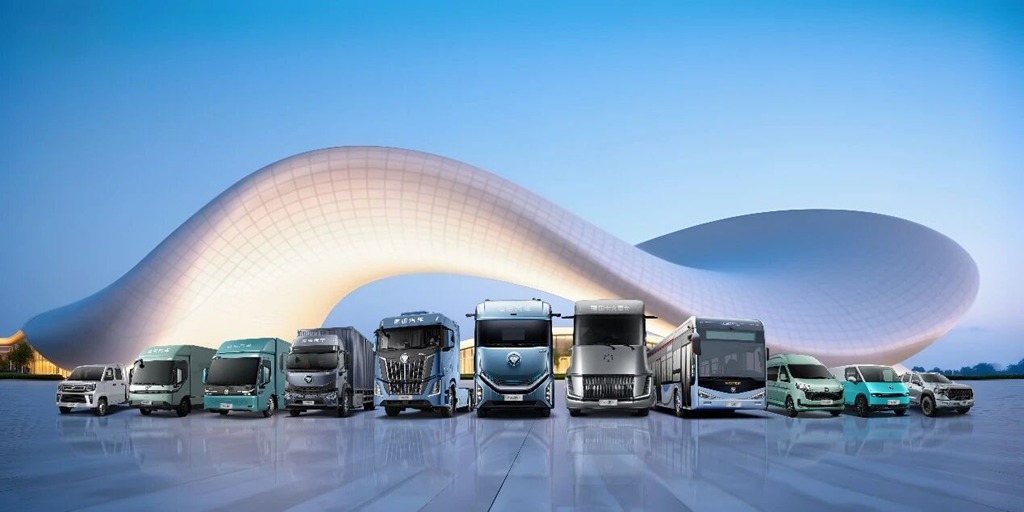
01 Systematic Export Demonstrates Core Competitiveness
Foton Motor’s overseas market sales exceeded 20,000 units in August, up 38.6% year on year, and overseas sales from January to August reached nearly 150,000 units, up 44.3% year on year — an impressive result. The sharp sales growth marks a key leap in the business model: Foton has moved beyond the early stage of simple whole-vehicle trade exports and officially entered a new stage of systematic globalisation in which technology, brand, supply chain and services advance together. In the past, Chinese commercial vehicle exports mostly focused on product output, gaining market share through product cost-performance. Systematic globalisation, by contrast, means replicating and exporting the entire set of capabilities — R&D adaptation, local manufacturing, supply chain assurance, brand operations, after-sales training and parts networks — to overseas markets.
Relying on long-term market cultivation, Foton carries out customised product development for the road conditions, regulations and usage scenarios of different regions, launching localised exclusive models for markets such as Oceania, Latin America, Southeast Asia and Africa. It has deployed localised KD production bases in multiple locations around the world, built an independently controllable global supply chain network to reduce cross-border logistics and tariff pressure, and driven local employment and industrial supporting development.
At the same time, the company has built a global network of parts distribution centres and service outlets, carried out special training for technical backbone staff at overseas service providers, and exported its mature domestic maintenance and repair technical system overseas, solving the after-sales pain points of overseas users and extending product delivery to whole-lifecycle vehicle operation support. At the brand level, Foton continues to strengthen brand awareness through international professional exhibitions and localised project deliveries — no longer just exporting a means of transport, but exporting a complete set of transport solutions. The systematic globalisation model has freed Foton’s overseas growth from pure price competition, opened up higher value-added growth space, and provided a referenceable practical sample for Chinese commercial vehicle globalisation.
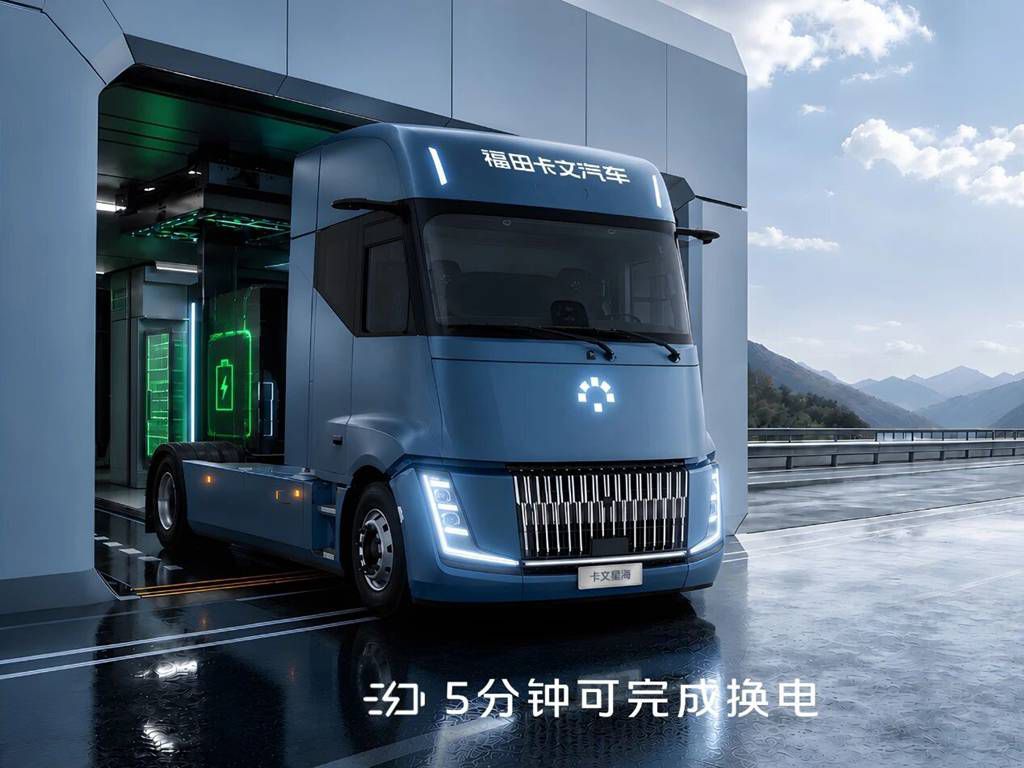
02 Rapid Growth of New Energy Products Reflects Technical Strength
Behind the rapid sales growth, Foton Motor’s new energy commercial vehicles have officially entered a stage of scaled development. August new energy product sales reached 12,000 units, up 50% year on year, and January–August new energy product sales reached 82,000 units, up 24.9% year on year, achieving simultaneous growth in both the domestic market and overseas exports. Amid the global wave of carbon neutrality, new energy commercial vehicles have become a definite industry trend, but achieving scaled deployment requires the joint support of core three-electric technology, product matrices, market channels and overseas certification capabilities.
In the domestic market, Foton Motor has laid out multiple technology routes including pure electric, hybrid and hydrogen fuel, with products covering all categories of commercial vehicles such as light trucks, heavy trucks, vans and buses, matching diversified scenarios including urban distribution, trunk logistics and public bus passenger transport, continuously iterating product performance to fit the real operating needs of domestic logistics and urban transport markets, with domestic new energy sales steadily rising.
In overseas markets, multiple new energy products have completed international authoritative certifications such as EU WVTA and Australian VTA. Pure-electric vans, electric buses and new energy light trucks have successively entered overseas markets including Europe, Southeast Asia and Oceania, achieving batch deliveries, and overseas new energy exports have become a new growth pole. With the domestic market consolidating the base and overseas markets opening up incremental demand, this two-way growth pattern confirms that Foton’s new energy business has crossed the stage of technical validation and small-batch demonstration and officially entered the scaled commercial operation cycle, transforming the new energy business from a cost input item into an important growth engine.
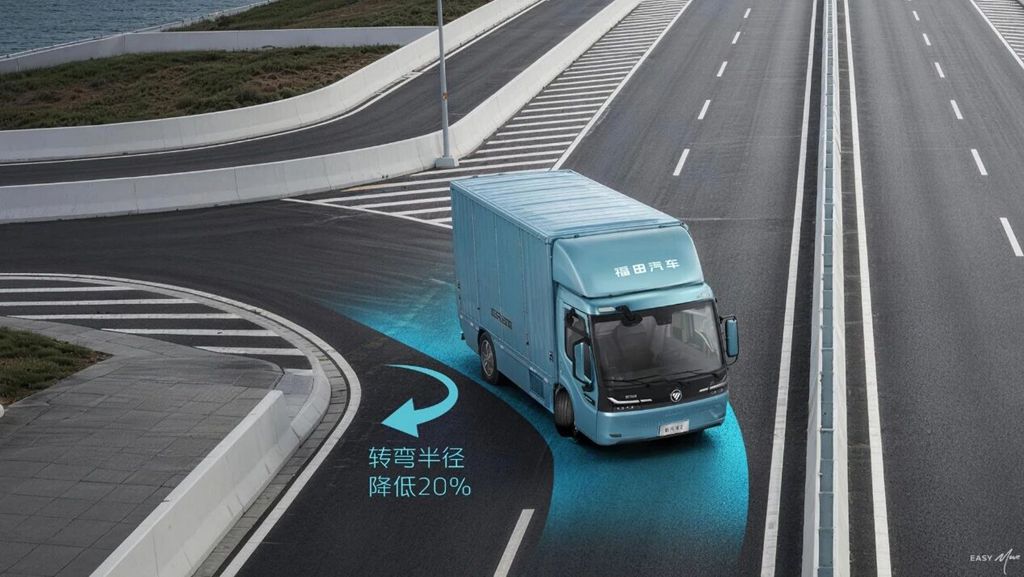
Taken together, the quality upgrade of the overseas business and the scaled volume growth of the new energy business are concrete manifestations of Foton Motor’s acceleration of the three strategic transformations of “comprehensive internationalisation, comprehensive new energy transition and comprehensive intelligence”. The two pillars — systematic overseas globalisation and two-way new energy growth — do not operate in isolation; they empower each other. New energy orders from overseas markets in turn drive the iteration of three-electric technology and product optimisation, while mature domestic new energy technology reserves empower the development of localised new energy products overseas, jointly serving the company’s overall strategic transformation.
Internationalisation opens up global growth space, new energy seizes the industrial opportunity of the green transition, and intelligence continues to polish the underlying vehicle technology platform. The three resonate together, driving the company’s transformation from scale expansion to high-quality development. Driven by the steady upward progress of the two core business segments, the company’s annual sales target is advancing steadily according to plan.
Looking ahead, opportunities and challenges coexist in the global commercial vehicle market — overseas geopolitical environments, overseas market competition and new energy technology iteration still hold many uncertainties. But relying on a clear strategic direction, a complete product matrix and sustained R&D investment, Foton Motor, rooted in the domestic market and laying out its business with a global vision, is expected to continue consolidating its industry position and steadily advance towards becoming a world-class commercial vehicle enterprise.
