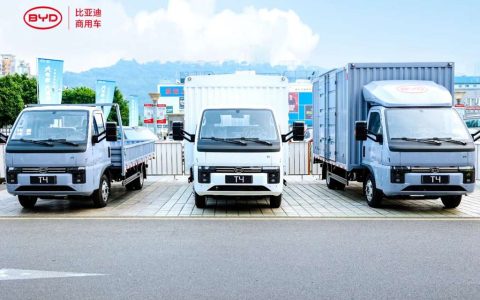
In the European commercial vehicle market, 2026 is shaping up to be a pivotal year for long-haul electric trucks. Charging infrastructure and other facilities have improved significantly compared to previous years, and companies including Volvo and Iveco have unveiled major new products. From the previous dominance of the Mercedes-Benz eActros 600 to the arrival this year of models such as the Volvo FH Electric long-range version and the Iveco S-eWay Aero, the segment is witnessing a vibrant and competitive landscape.
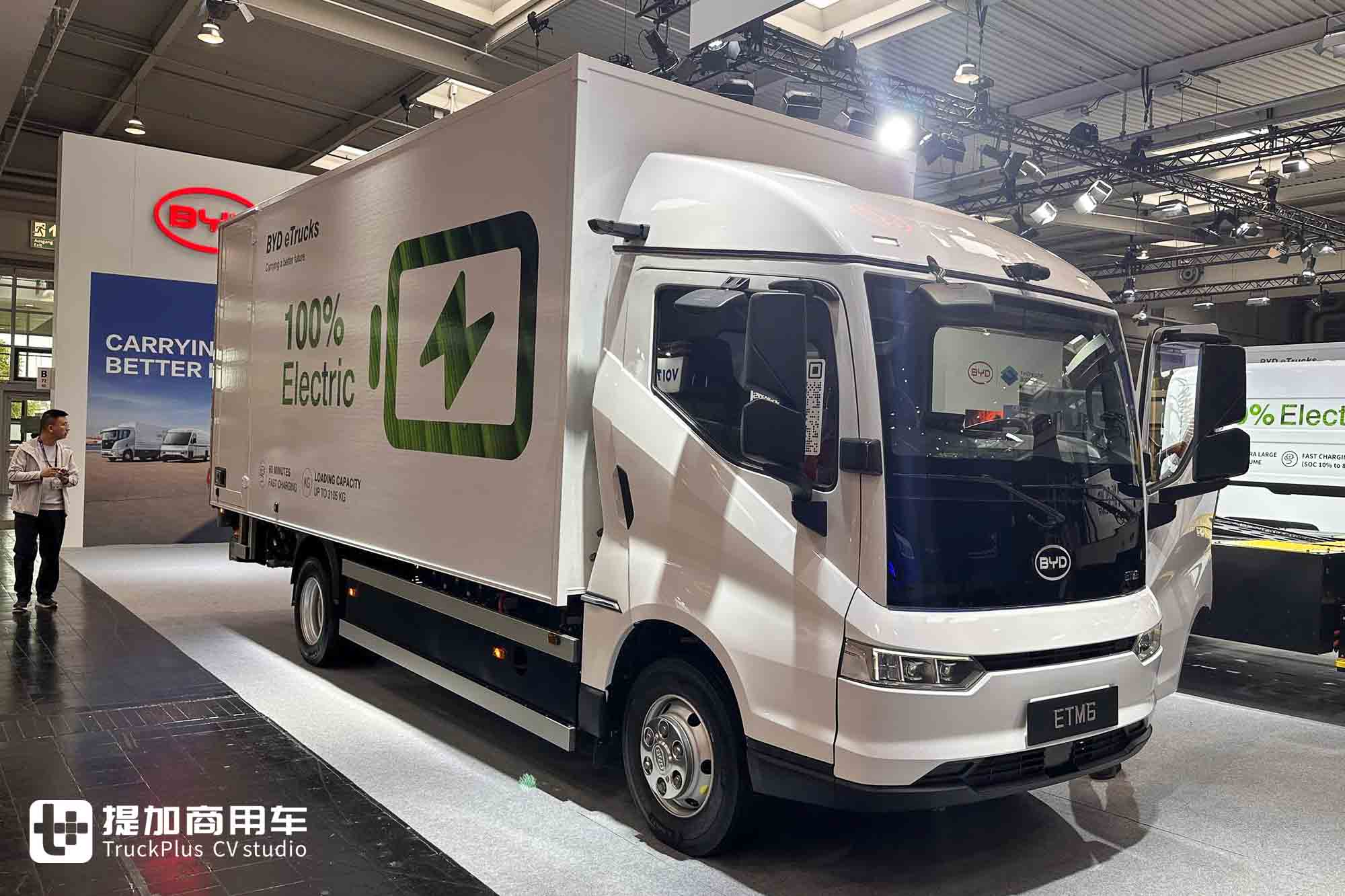
Speaking of electric trucks, one cannot overlook a legendary brand from the East: BYD. This technology giant holds an unchallenged market position in global pure electric passenger vehicles and is equally dominant in pure electric commercial vehicles. Previously, BYD has launched products in Europe including the ETP3 pure electric van, ETM6 pure electric medium truck, and ETH8 pure electric heavy truck, covering the most traditional and typical short- and medium-haul transport scenarios for pure electric commercial vehicles. However, the absence of larger-tonnage, longer-range products has constrained BYD’s further expansion in Europe.
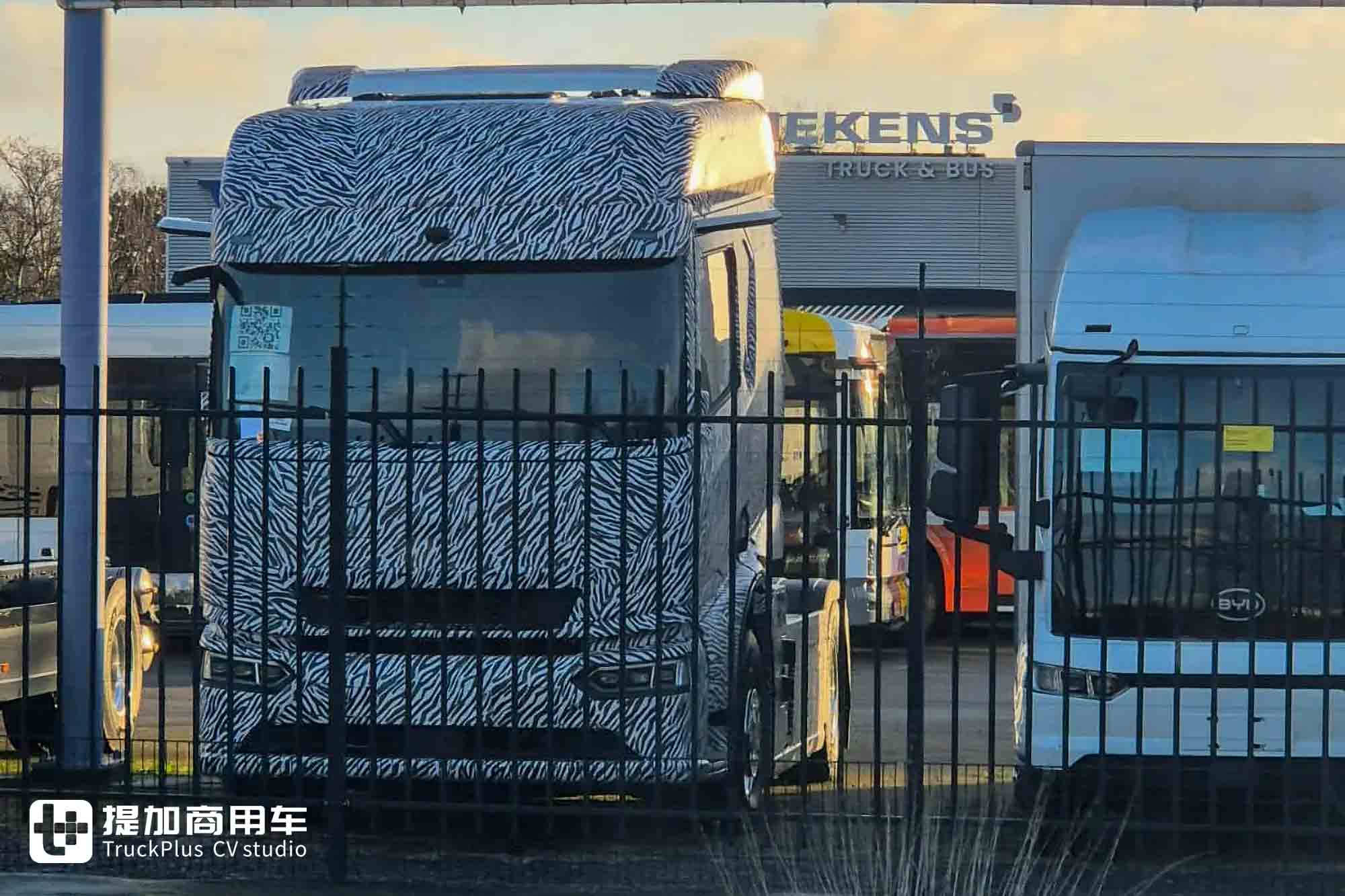
That situation, however, is about to change. Since March of this year, spy photos of a new BYD vehicle undergoing road testing in Europe have gradually emerged. The photo above was taken on March 16 at the parking lot of Bluekens EV, a truck dealer in the Netherlands. Compared with the ETM6 pure electric medium truck parked beside it, you will notice that this vehicle is considerably larger in size.

Even when compared with the ETH8 pure electric heavy truck on the left, this new vehicle’s dimensions are in no way inferior — signaling a larger tonnage, stronger power, more batteries, and correspondingly greater payload and longer range. So what exactly is this vehicle? Let us analyze it in detail below.
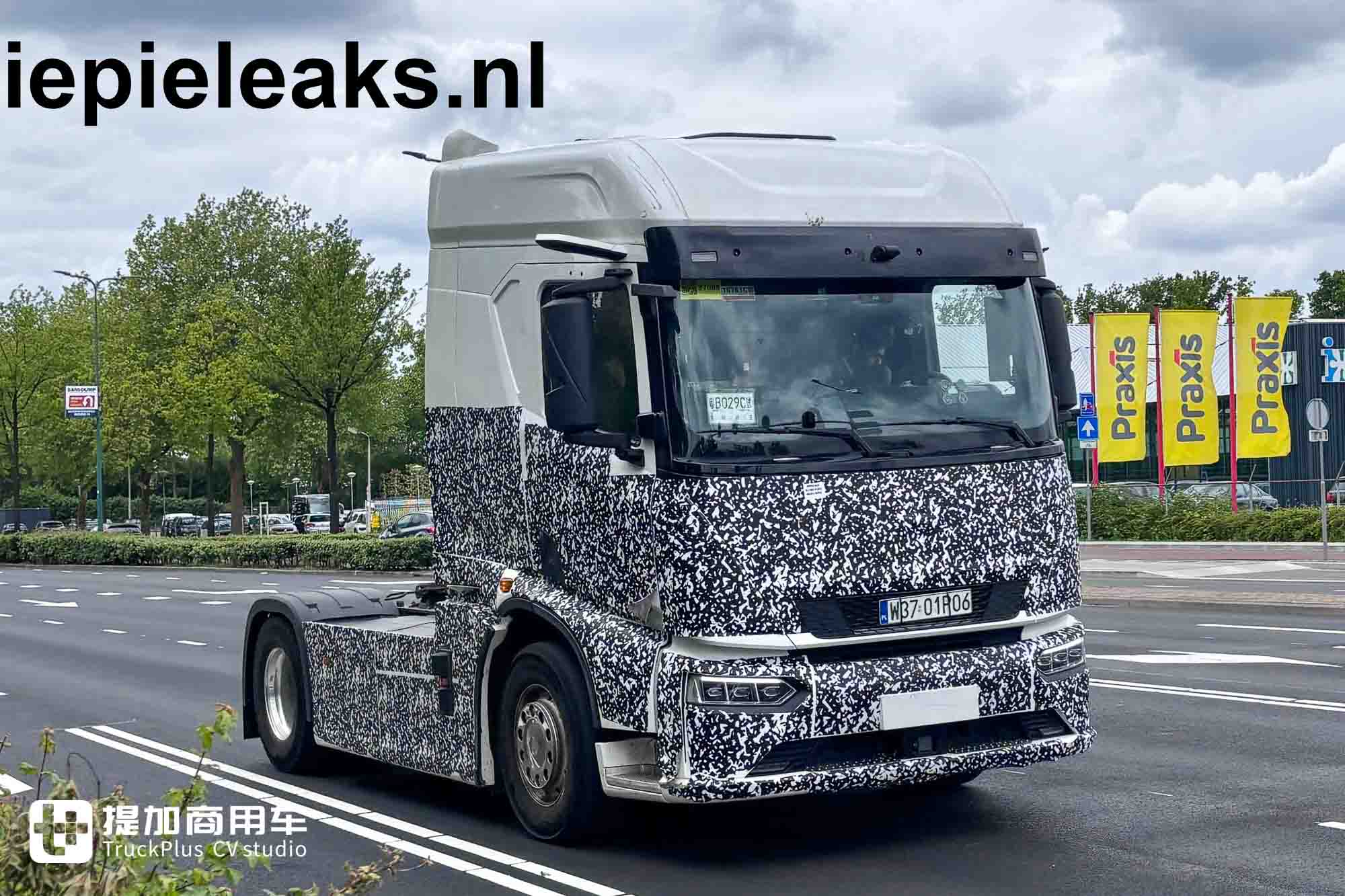
Although the photo was taken in the Netherlands, the Guangdong (粤B) temporary license plate visible behind the windshield reveals its origins.
Starting with the exterior: this new vehicle adopts a typical BYD design language, crafted by BYD’s Global Design Director Wolfgang Egger. Its lines are minimalist and highly futuristic, complemented by sharp LED headlights that give the entire vehicle a powerful first impression. This design language is consistent with the ETH8 pure electric heavy truck previously launched in the European market, maintaining a family heritage that makes it instantly recognizable as a BYD heavy truck.
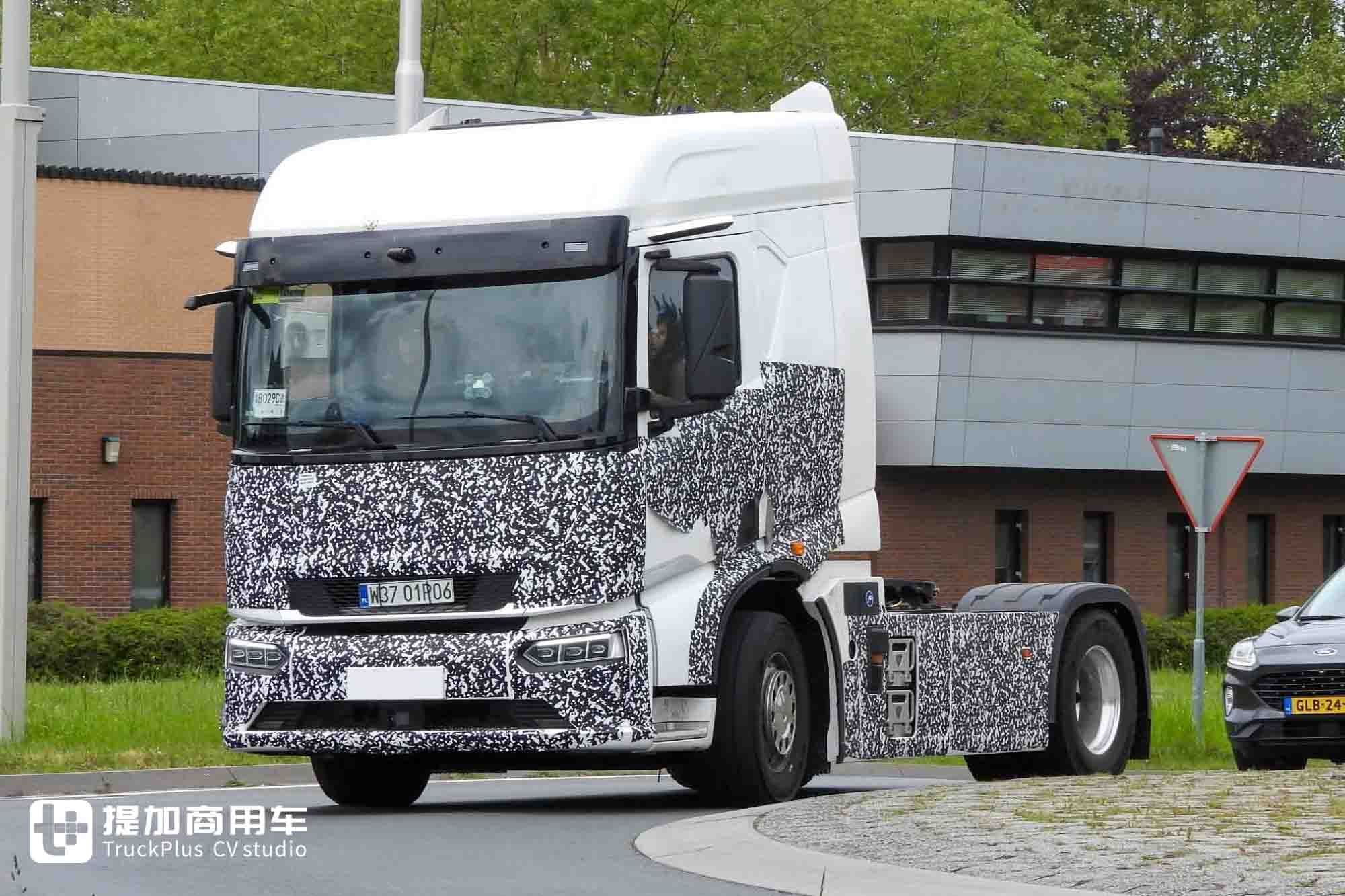
At the same time, this new vehicle features a high-roof cab with a rear fairing designed to connect smoothly with the trailer — a feature never before seen on BYD’s European products. Compared with the flat-roof cab used on the ETH8, the high-roof cab provides greater interior headroom, allowing the driver to stretch more comfortably. It also enables more storage space and living amenities to accommodate the needs of carrying personal belongings during long-haul transport.
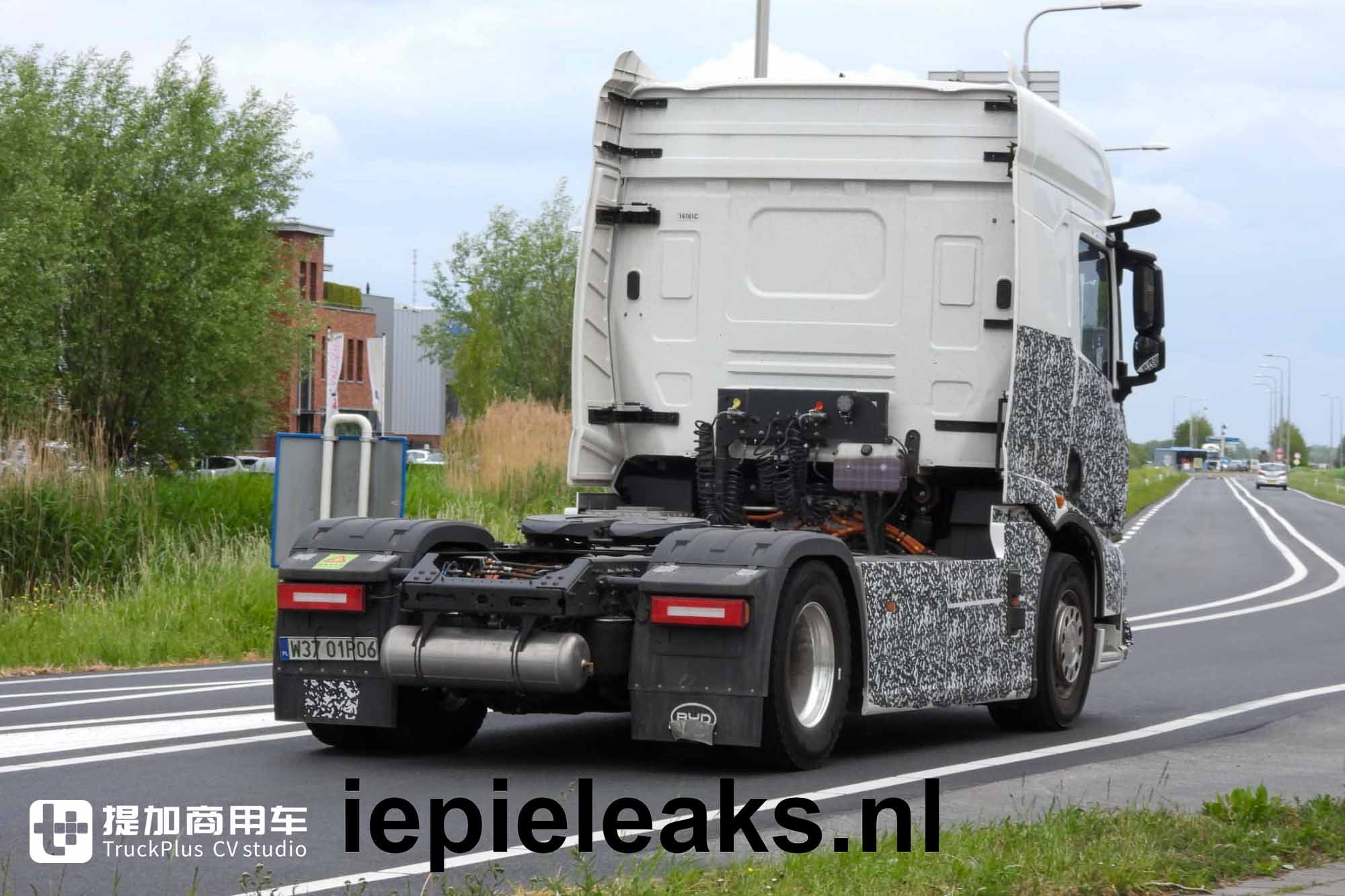
Taken together, this new BYD vehicle is not an entirely new development but is derived from BYD’s existing domestic product: the Q3 series pure electric tractor. Accordingly, the Q3’s three-electric configuration can be used to predict the new vehicle’s specifications. The domestic Q3 tractor offers 400kWh, 452kWh, and 600kWh battery options, all using BYD’s proprietary lithium iron phosphate Blade batteries. The e-drive system is available in two configurations: 360kW/560kW and 400kW/600kW, and the European version is expected to have similar specifications. Additionally, according to some reports, this new BYD vehicle may support megawatt-level ultra-fast charging, which would dramatically improve its single-day range capability.
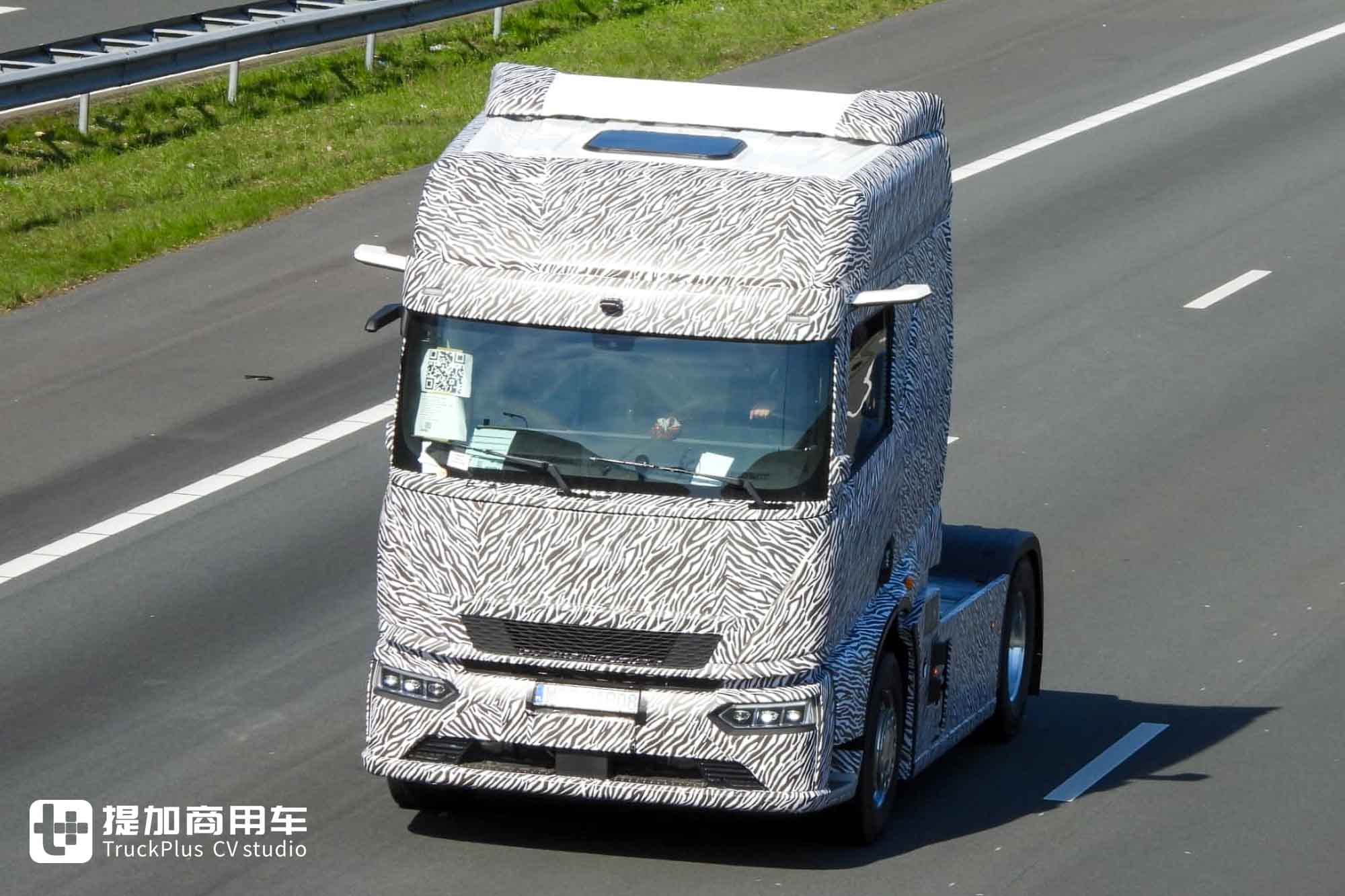
Of course, this vehicle is not simply a transplant of the domestic Q3 — BYD has also made certain optimizations to meet the needs of the European local market. For example, the vehicle adopts a 4×2 drive configuration, which is lighter in weight and lower in resistance, suitable for European long-haul transport dominated by flatland highways. Meanwhile, millimeter-wave radar has been added behind the front wheels to detect blind spots at the front and rear of the vehicle, in order to comply with the EU General Safety Regulation (GSR).
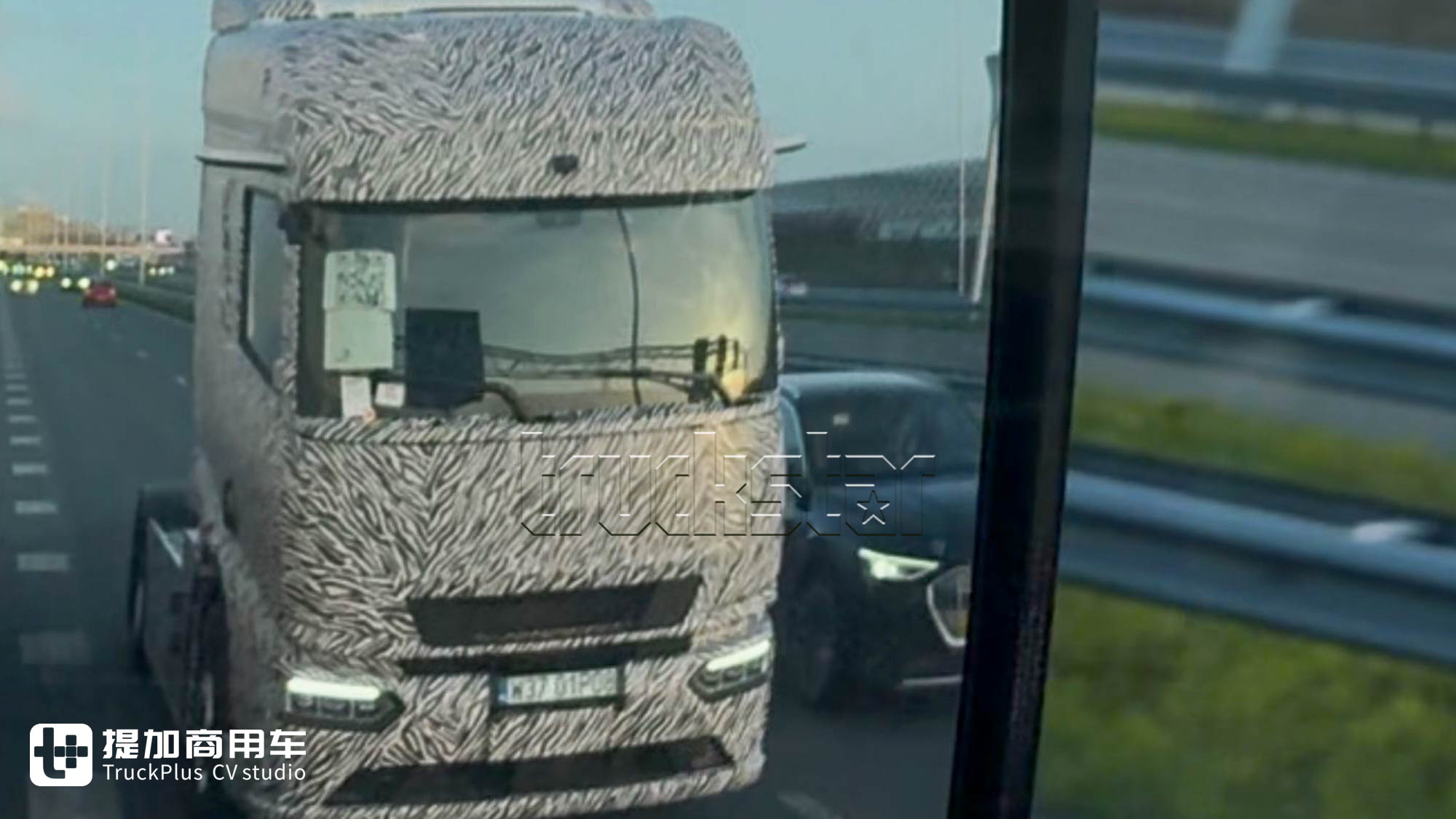
Digital mirrors, also seen for the first time on a BYD vehicle, effectively reduce aerodynamic drag and wind noise while improving visibility.
According to European media reports, BYD will officially unveil this new vehicle at the upcoming IAA show. By then, the European long-haul electric truck market will welcome yet another new competitor. From a timing perspective, BYD’s entry into the European pure electric tractor market at this moment could not be more opportune. With solid three-electric technological strength and a strong reputation in pure electric commercial vehicles, this new vehicle is expected to achieve considerable market performance in Europe. We will be on-site at the exhibition to bring you a first-hand experience of this new vehicle’s appeal. See you in Hannover!