
On 6 November, the BAIC Foton supercharging strategy launch event was held in Beijing. Chang Rui, General Manager of BAIC Group and Chairman of BAIC Foton, and Lu Zhenghua, General Manager of BAIC Foton, attended, together with representatives of industrial-chain partners including CATL, Sunwoda, TELD and Hunan Jingneng, customer representatives and media guests. At the event BAIC Foton formally unveiled its territory-wide supercharging ecosystem strategy and gave the world premiere of the Aumark Z supercharging light truck and a megawatt-class supercharging heavy truck, marking the official start of the high-power charging era for commercial vehicles.
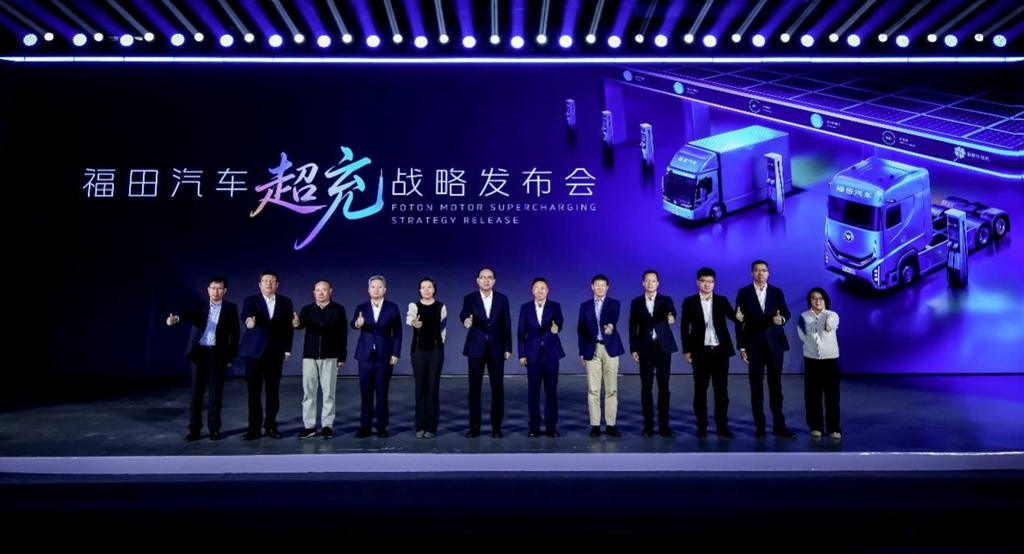
During the 15th Five-Year Plan period, building an industrial innovation ecosystem that integrates vehicles, roads, transport and energy has become an important direction for the industry, with plans for more than 50 million kilowatts of vehicle-grid interactive adjustable capacity and 300,000 high-power charging facilities. As new-energy commercial vehicles extend from short and medium hauls to medium and long-haul trunk routes, charging efficiency has become the key bottleneck constraining large-scale rollout. Drawing on more than 20 years of new-energy technology accumulation, BAIC Foton has integrated resources across the entire chain of vehicles, batteries and energy platforms to launch a territory-wide supercharging ecosystem solution built on vehicle–charger–network–cloud coordination, connecting vehicles, charging piles, the charging network and cloud platforms and upgrading the commercial vehicle charging model.
Vehicle–charger–network–cloud coordination builds a territory-wide supercharging ecosystem
As the penetration rate of new-energy commercial vehicles climbs steadily, high-capacity models are becoming mainstream. Faced with limited single-gun charging current, insufficient charging infrastructure, long charging times and constrained fleet operating efficiency, Qin Zhidong, Deputy General Manager of BAIC Foton, gave an in-depth explanation of the strategy. He said commercial vehicles are no longer merely capacity tools but are shifting towards multiple value carriers — data carriers, energy carriers and ecosystem carriers. Beyond traditional freight revenue and green capacity premiums, diverse business value from depot services, virtual power plant peak shaving, battery-vehicle separation and cascaded battery use is being released.
Relying on more than 3.5 million connected vehicles online, 3 PB of daily data processing capacity and more than 770,000 linked charging terminals, BAIC Foton has built a nationwide capacity and traffic heat-sensing network that provides a solid data foundation for precise planning of the charging network.
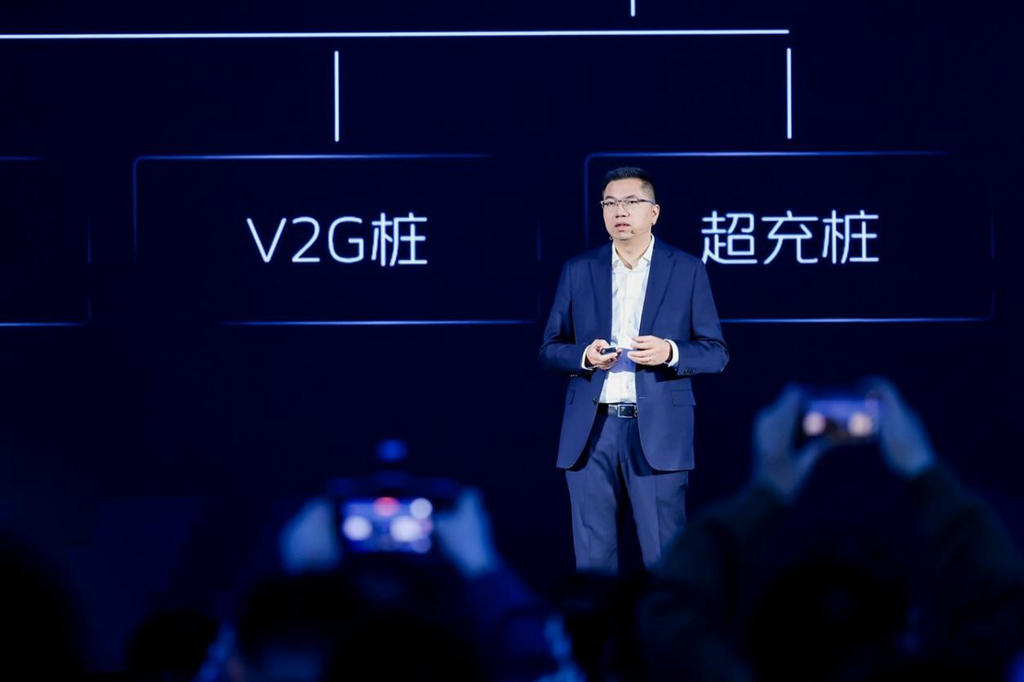
Around the vehicle–charger–network–cloud coordination concept, BAIC Foton has built a four-in-one system comprising a connected-vehicle data platform, a charging operations platform, a vehicle-grid energy interaction platform and a power-battery health management platform. On the vehicle side it integrates supercharging batteries, high-voltage platforms, efficient cooling and battery safety control; on the charger side it relies on liquid-cooled supercharging and V2G bidirectional charging and discharging to execute cloud instructions; on the network side it connects energy flows through load forecasting and aggregated energy scheduling; and in the cloud, AI scheduling and full-lifecycle battery big data provide unified awareness of vehicle, battery and depot status.
Technically, the supercharging battery achieves a charging rate above 4C and 95% charge-discharge efficiency; heavy trucks can add 100 km of range in a 6-minute charge, and the battery cycle life exceeds 6,500 cycles. The 800V high-voltage architecture is compatible with voltages up to 1,000V, opening a 1.5 MW charging channel with 800A per gun and 1,600A across two guns, for a peak dual-gun power of 1.5 MW. To address thermal risk in high-power charging, the supercharging cooling system keeps the charging connector temperature rise within 40K and the power battery temperature rise within 32K at 1,600A, securing the safety baseline for high-power charging.
At the same time, BAIC Foton is building data-driven intelligent supercharging depots that integrate solar generation, storage and charging. With 10 kV AC input and 1,000 V DC output, and integrating photovoltaics, storage, vehicles and loads, the depot becomes a microgrid unit capable of generation, storage and dispatch.
On the ecosystem side, BAIC Foton has launched a supercharging industry ecosystem alliance with partners including CATL, Sunwoda, TELD and Hunan Jingneng, covering the full chain of equipment R&D, joint technology creation, depot construction and energy operations, with plans to build 5,000 standardised supercharging complexes. Three delivery models are used: fully self-invested flagship demonstration depots; joint investment and shared returns; and exporting complete equipment and technical solutions to empower the industry. Leveraging a business network covering more than 140 countries and regions, BAIC Foton will accelerate the coordinated overseas rollout of new-energy vehicles and the charging ecosystem, focusing on Asia-Pacific, Latin America, Africa and Europe, and plans to install more than 3,000 units of overseas charging ecosystem capacity by 2027.
World premiere of the 8C supercharging light truck reshapes urban distribution charging efficiency
New-energy light trucks have rapidly penetrated both urban distribution and inter-city scenarios: penetration rose from 18% to 29.7% in 2024-2025, is expected to exceed 50% in 2026, and in the cold-chain segment alone exceeded 77% in a single month. Long charging waits, range anxiety, battery degradation from fast charging and depot queues are the core pain points for urban distribution and cold-chain logistics users.
Ma Lu, President of Foton's Aumark business unit, formally launched the Aumark Z supercharging light truck. As the world's first supercharging light truck built on a native dedicated electric platform, the whole vehicle was developed from the ground architecture up for supercharging requirements. It carries a peak 8C supercharging battery with greatly optimised internal resistance, 97% charge-discharge efficiency and 1.05 MW peak charging power, delivering 32 km of range per minute of charging; a 20%-80% SOC charge takes only 8 minutes, and the battery temperature peak stays below 50°C throughout. For severe northern winters, 15°C/min pulse heating brings the pack into its optimal supercharging temperature window in just 2 minutes 30 seconds at -20°C. The vehicle comes with an 8-year/800,000 km warranty.
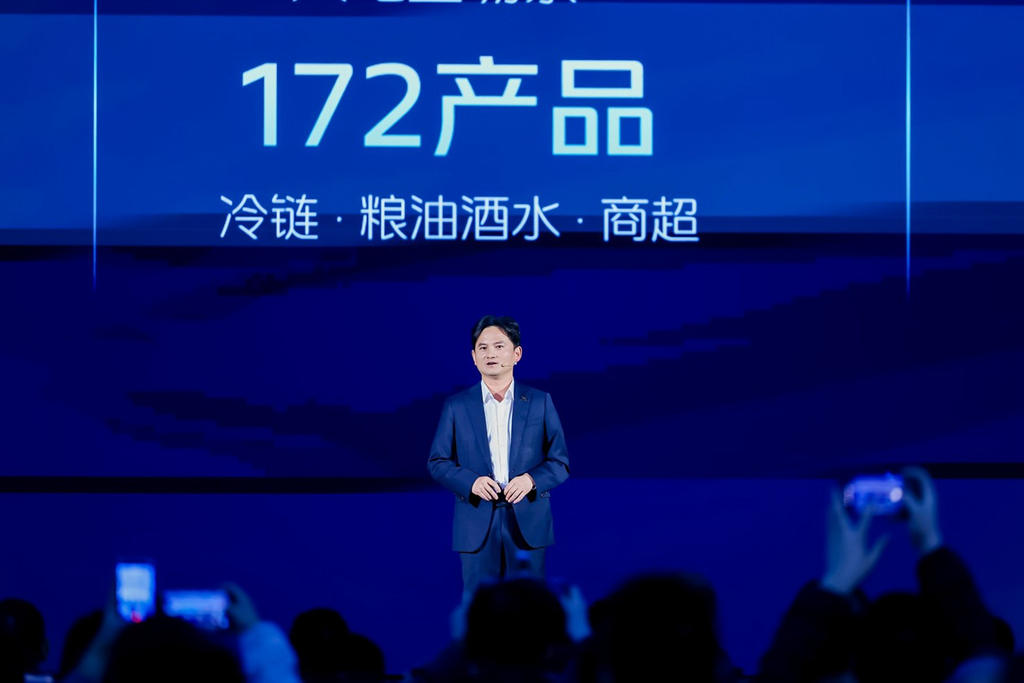
The vehicle carries three core systems: an 800V high-voltage architecture, liquid-cooling thermal management and the FEEP2.0 intelligent architecture. The 800V architecture supports 1.05 MW peak charging power and up to 1,600A at the charging connector; the liquid-cooling system raises heat exchange capacity by 40% and current-carrying capability by 150%, forming a 10 kW territory-wide thermal management system that jointly controls the battery, electric drive, cabin and refrigeration unit; the FEEP2.0 architecture, based on VDCU domain-integrated vehicle control, delivers 20% vehicle energy savings and over 99% accuracy in battery health identification.
The Aumark Z comes standard with V2G bidirectional charging and discharging, allowing the vehicle to absorb surplus solar power and feed electricity back to the grid at peak times, creating additional fleet revenue. On an 800 km round-trip cold-chain test route between Maoming and Shenzhen, the vehicle kept the refrigeration unit running throughout and needed only one 8-minute charging stop. With the planned 5,000 supercharging stations, the service network will cover 368 cities. For the first 800 buyers, an eight-point supercharging package worth RMB 19,888 is offered, including purchase subsidies, financing policies and downtime protection, plus a 3-year buyback at 40% of value, comprehensively lowering the cost of buying, running and replacing vehicles.
Megawatt-class supercharging heavy truck arrives to solve trunk-line charging challenges
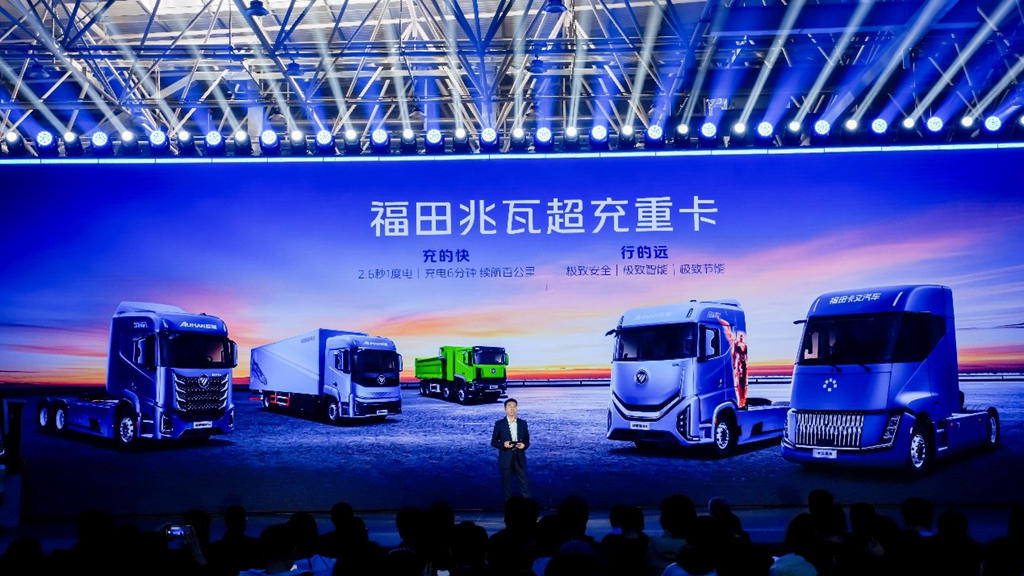
Addressing industry challenges in infrastructure, operating efficiency and e-powertrain safety for trunk-line heavy trucks, Chen Peng, Vice President of R&D at Foton Auman, launched the megawatt-class supercharging heavy truck. The products span the Auman Galaxy and Kavo Xinghai series and suit diverse trunk-line scenarios including express and fast freight, cold-chain distribution, port shuttles, coal and aggregates, and heavy industry.
The model is the heavy truck industry's first mass-produced through-type 800V high-voltage platform: at equal power, charging current falls by 30%, line losses drop by 50% and e-powertrain thermal losses fall by 15%, achieving high efficiency and energy savings in high-power transmission. The battery uses a module-free integrated design with a high-strength lightweight enclosure; an AI supercharging algorithm dynamically optimises the charging curve, balancing high-power charging with battery life to reach a 6,500-cycle lifespan. In measured conditions the vehicle can sustain 1,600A high-current charging and still maintain a relatively high charging current at 80% SOC.
The vehicle features a new Cabin 2.0 integrated cooling module that cuts weight by 23%, reduces module complexity by 50% and raises system thermal efficiency by 10%, keeping cell temperature stable in the optimal 25-50°C range. It supports vehicle-charger coordinated scheduled charging and 23 remote intelligent control functions. Measured data show 1 kWh charged in 2.6 seconds, a 20%-80% SOC charge in 18 minutes, 100 km of range from a 6-minute charge, and a temperature peak below 50°C throughout.
On safety, a five-layer territory-wide protection system covers the battery, architecture, system, vehicle and vehicle-cloud coordination, and the vehicle has completed more than 100 extreme tests including penetration, fire, high drop and wading, with a wading depth of 0.9 m. The e-powertrain is fully self-developed, with the VCU coordinating the powertrain, shift logic, long-slope torque and thermal management. After calibration across high temperature, high altitude, severe cold, long grades, ports and mountain curves, the vehicle handles complex road conditions with all-territory capability.
On intelligence, 22 high-level driver-assistance functions are available across the range, raising vehicle safety by 67% and cutting energy consumption by a further 3%. Combined with more than 50 technologies including ultra-low drag and lightweight design, whole-vehicle energy consumption is 5%-8% better than the industry and operating efficiency 10% higher, providing efficient and reliable transport solutions for high-volume trunk logistics.
Powered by supercharging, energising transport. Entering the second half of competition in new-energy commercial vehicles, BAIC Foton will continue to leverage the coordinated advantages of vehicles, batteries and the energy ecosystem, working with industrial-chain partners to build a solar-storage-vehicle integrated vehicle-energy interaction ecosystem, extend supercharging network coverage across urban distribution and trunk logistics, help the logistics industry cut costs and raise efficiency, and accelerate the green and low-carbon transformation of the commercial vehicle industry.
