
As passenger route operations continue to improve, passengers now expect far more than "getting there on time". More generous personal space, a more relaxed seating posture and more thoughtful details have become the key levers for route operators to build reputation and competitiveness. The Vanguard V Line Edition has captured this market demand for an upgraded experience, carrying out a systematic iteration around cabin space, seat design, convenience features and safety details — seven dimensions upgraded at once, translating long-distance passenger comfort into the real feel of every single ride.
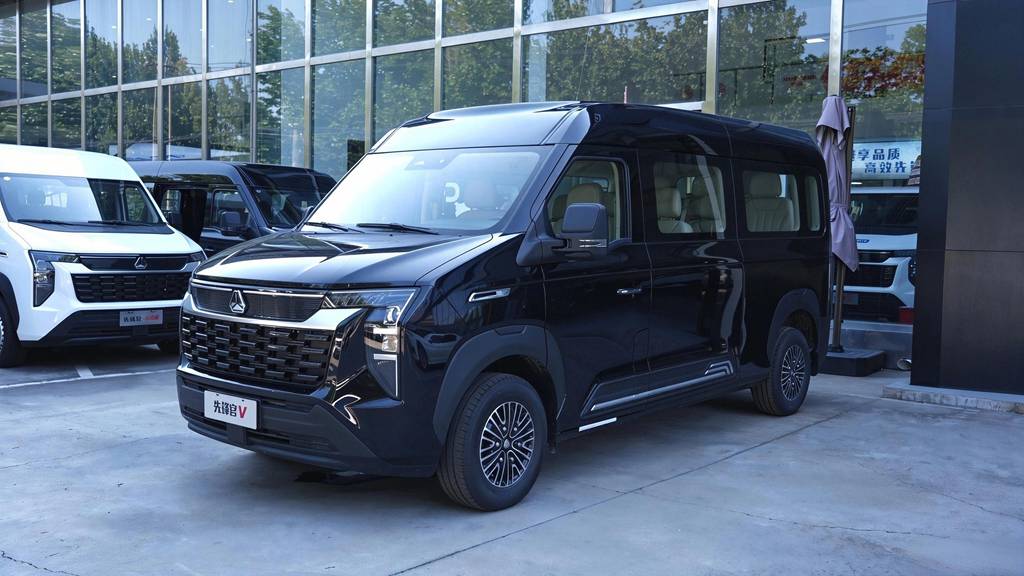
On long-distance services, lateral crowding causes the most direct discomfort: passengers bump into each other, movement is restricted and satisfaction drops. The Vanguard V Line Edition has replaced its moulded interior panels with a thinner structure, enlarging the occupant-area width from 1,465 mm to 1,805 mm — a net gain of 340 mm, or 23%. With that extra lateral space and independent seat layout, every passenger enjoys more room to move, whether on short feeder runs or long-haul routes, while operators win better passenger feedback from the wider cabin.
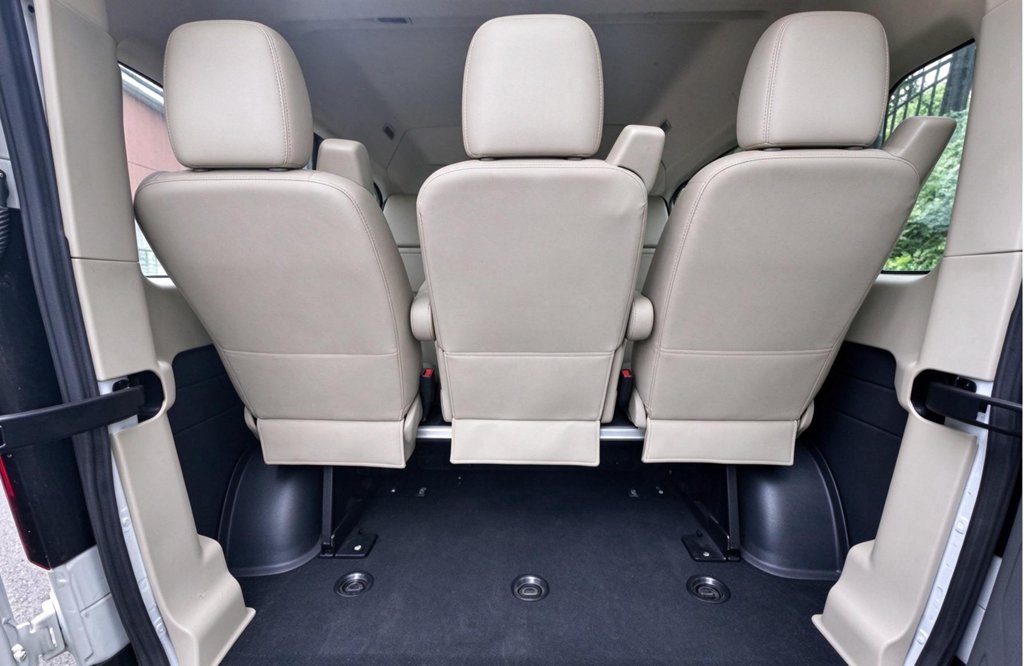
Multi-row passenger vehicles often struggle with insufficient storage and cramped rear rows. The Vanguard V Line Edition adds a 148-litre under-seat storage space beneath the last row through seat redesign, so luggage and personal belongings can be stowed neatly. Seat pitch has also been increased across rows: 777 mm / 666 mm / 650 mm from front to back, and with the last row raised, available front-to-back space reaches 461 mm. Balancing storage with legroom, no row is compromised and overall space utilisation is greatly improved.
Phones, earphones and other portable electronics are a daily necessity on the move, yet conventional vehicles offer too few charging ports, causing arguments over outlets in group travel. This upgrade expands the occupant-area charging ports from 2 to 6 — three USB-A and three USB-C — which, together with the front-row points, brings the total to 8 charging interfaces across the vehicle. The mix serves both old and new devices, and the coverage spans the whole passenger zone, so everyone on board can charge at the same time, stay connected on long journeys and never worry about battery life.
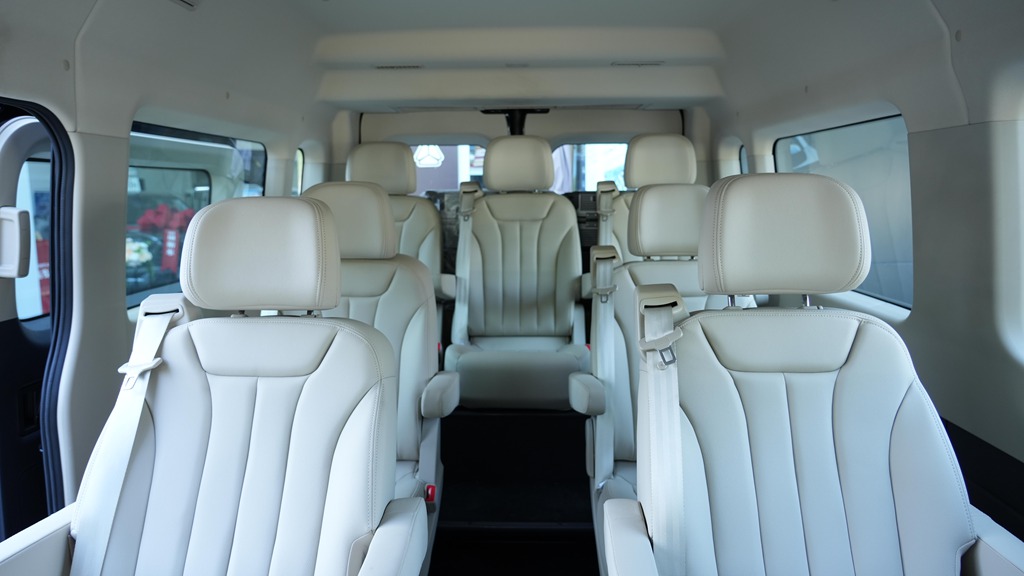
The seat is the core of long-distance comfort; single-position support and limited recline quickly tire passengers. This round of upgrades overhauls the whole seat: the mounting leg geometry is optimised to avoid structural interference, laying a solid foundation for the seat functions; cushion and backrest thickness in the main load-bearing zones is increased by 25%, and cushion leg support length by 47% — the thicker, longer support distributes body pressure evenly and reduces leg suspension and lumbar pressure; backrest adjustment range expands, with forward-fold travel up 145% (near-horizontal, ideal for a nap) and rearward recline up 33% for more relaxation. One seat delivers firm support and a wide range of postures — upright, reclined or resting — so even long rides stay comfortable.
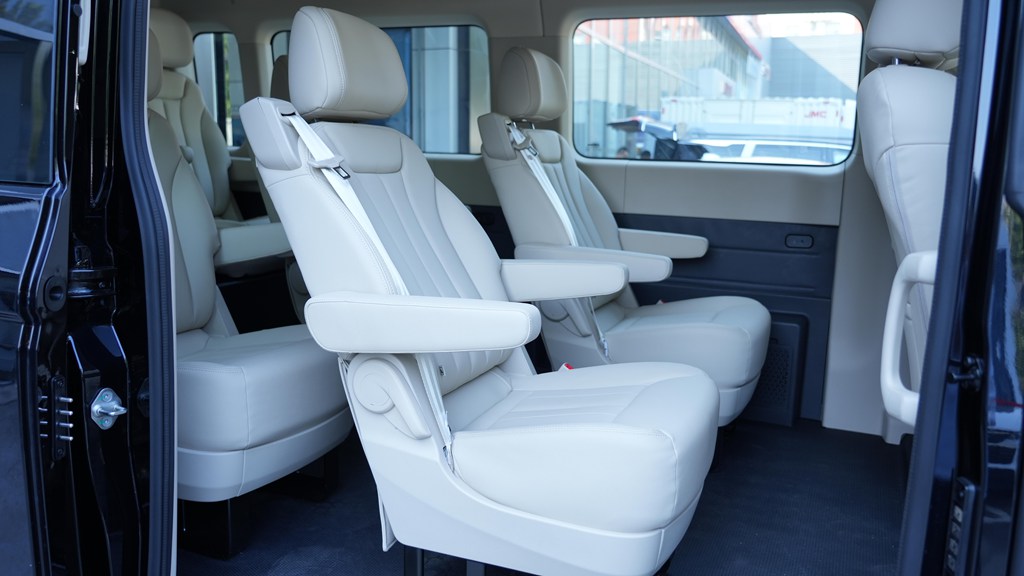
With nowhere to rest their arms on long journeys, passengers tire easily; ordinary armrests have few positions and are too small for different needs. The new armrest offers three adjustment positions — 0° / 12° / -12° — with enlarged dimensions: width grows from 45 mm to 62 mm and length from 335 mm to 415 mm. The larger contact area and multi-angle adjustment suit different sitting postures, letting arms rest naturally and easing fatigue — comfort magnified in the small details.
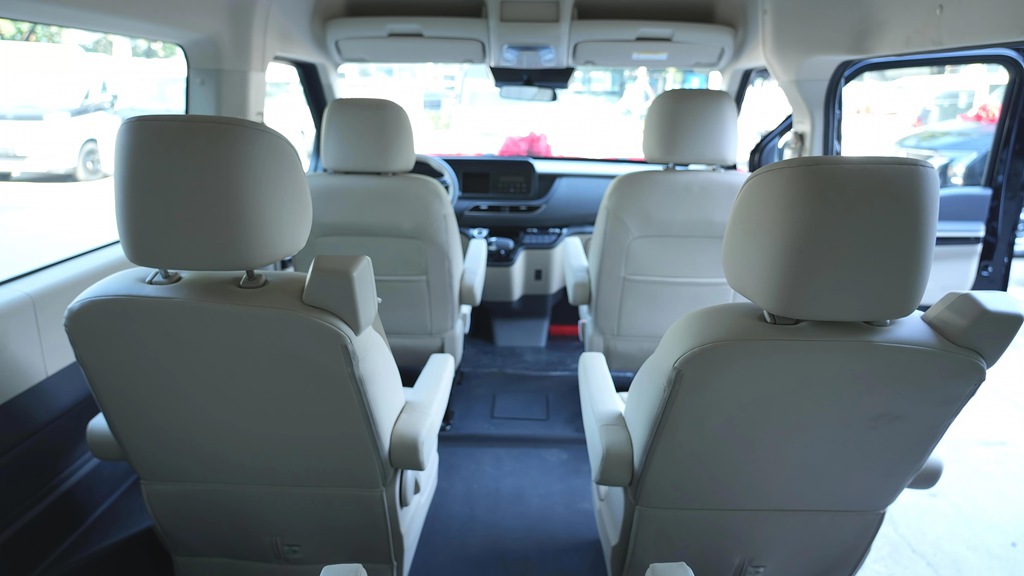
Lateral body movement while driving leaves the head unsupported, and fixed headrests struggle to fit passengers of different heights. The new headrest adds side wings for stronger lateral wrap, keeping the head steady on the road; the adjustment mechanism is also upgraded from fixed to four-position adjustment with five locking points. Tall or short, every passenger can find a position that fits the head and neck, balancing ride comfort with head protection.
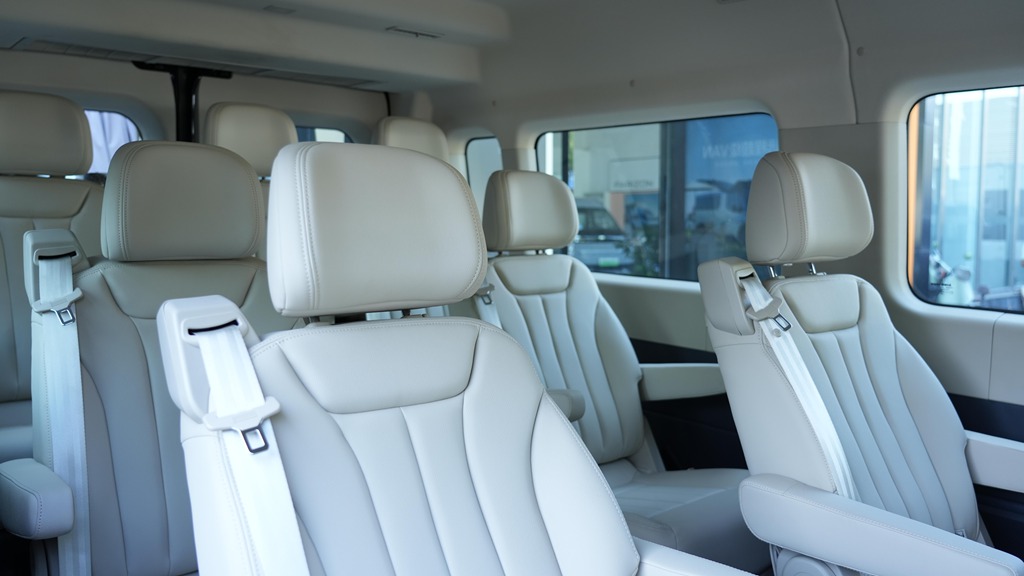
The seat belt is the safety baseline of any journey, but a poorly placed outlet causes shoulder pressure and chafing. This upgrade repositions the belt outlet and optimises the extraction angle using ergonomics, so the load follows the natural curve of the shoulder. Safety standards are strictly maintained while pressure during wearing is reduced — smoother, more natural and more comfortable, without compromising safety.
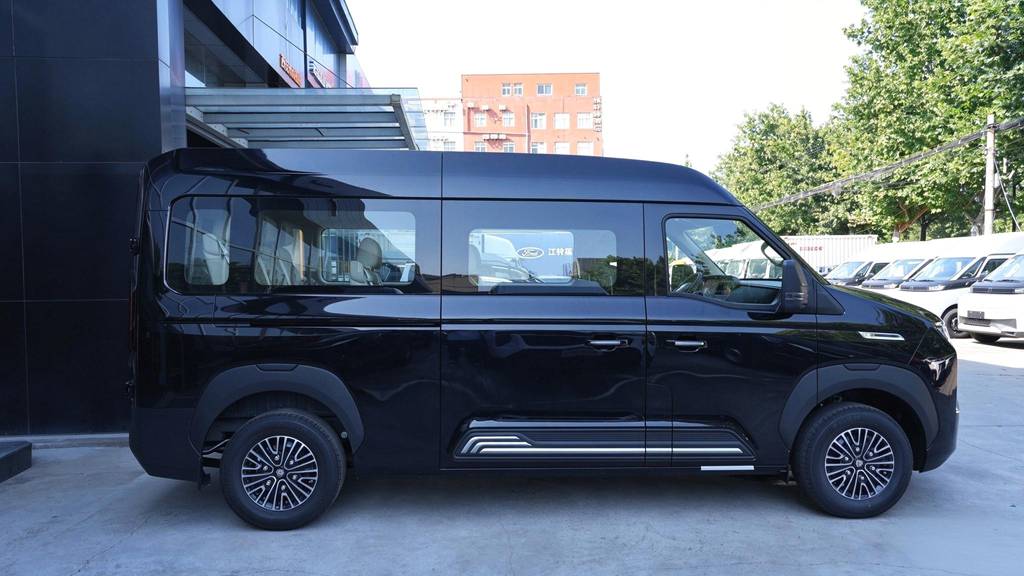
From the wider cabin and high-frequency convenience features such as storage and charging, to the fine ergonomic work on seat support, adjustment, armrests and headrests, and the humanised tuning of the seat-belt anchorage, the Vanguard V Line Edition upgrade is not a stack of single-point parameters. It is a whole-package experience optimisation built around passenger-route operating scenarios and real passenger pain points — a wider, steadier, more relaxed and more considerate cabin that helps operators sharpen their service competitiveness, so that every long-distance journey delivers a ride quality that exceeds expectations.

