
In 2026 the European heavy truck market stands at a delicate point in its electrification transition. The latest EU data show the share of new plug-in heavy truck registrations rising to 4.8% in the first half, up 1.2 percentage points year on year, with leading players such as MAN projecting a 15%–35% penetration rate by 2030. Yet beneath the buoyant growth figures, the industry cannot escape one core contradiction: the cost advantage of electric heavy trucks is tightly bound to policy incentives rather than to efficiency gains in the product itself. A recent survey by Daimler Truck of fleets in Germany, the UK and France confirms this concern: more than 40% of respondents recognise the cost potential of electric trucks, but 61% doubt the accessibility of charging infrastructure, and many fleets remain watchful about the long-term stability of policy.
MAN's European benchmark customer TCO model lays bare the awkward reality of European freight: in a standard scenario of five-year leasing, 100,000 km a year and 70% of mileage on toll roads, an electric heavy truck costs only 1 euro cent per kilometre less than a diesel truck — almost negligible. Breaking down the cost structure reveals that the electric truck's leasing cost is 2.5 times that of a diesel truck, equivalent to a full 30 euro cents more per kilometre. The marginal cost advantage is ultimately propped up by 18 euro cents of toll relief and 18 euro cents of energy cost savings. Once the toll differential is removed, the EV's TCO advantage shrinks directly.
This also reveals the deep challenge now facing the European electric heavy truck market: when policy incentives have not yet fully translated into the product's own economic advantage, how to achieve genuine endogenous cost reduction through technical innovation becomes the key to whether electrification can continue. For Chinese new-energy heavy truck makers trying to enter the European market, this is both a threshold that must be crossed and an opportunity to build differentiated competitiveness. How to escape dependence on policy favours and price competition and create sustainable operating economics through product technology progress? This is precisely the direction Subao Technology is exploring in the European market.
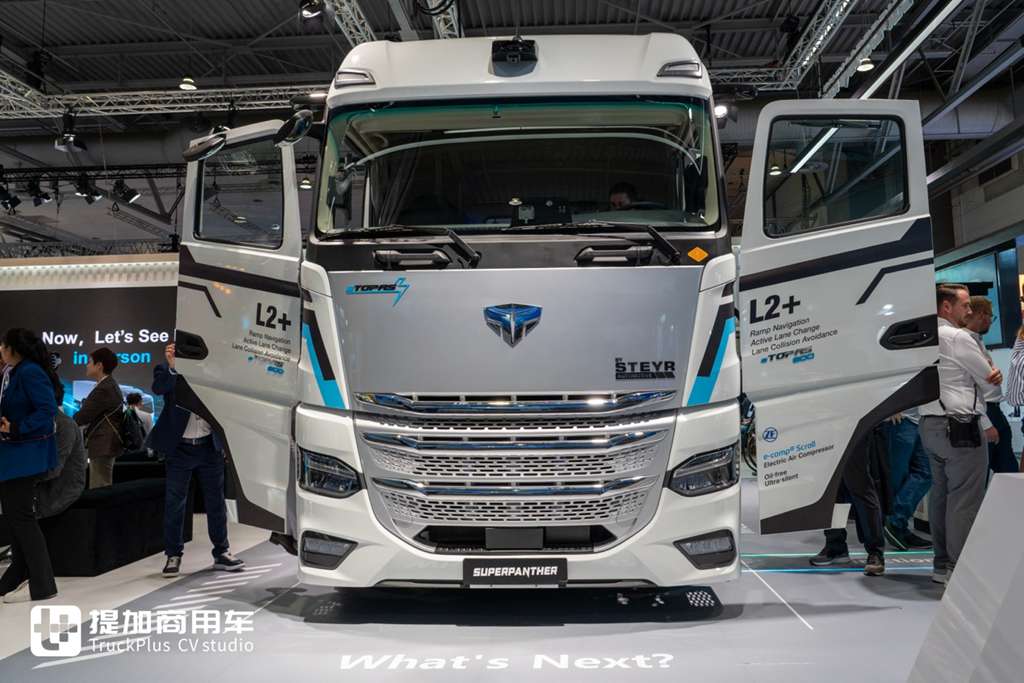
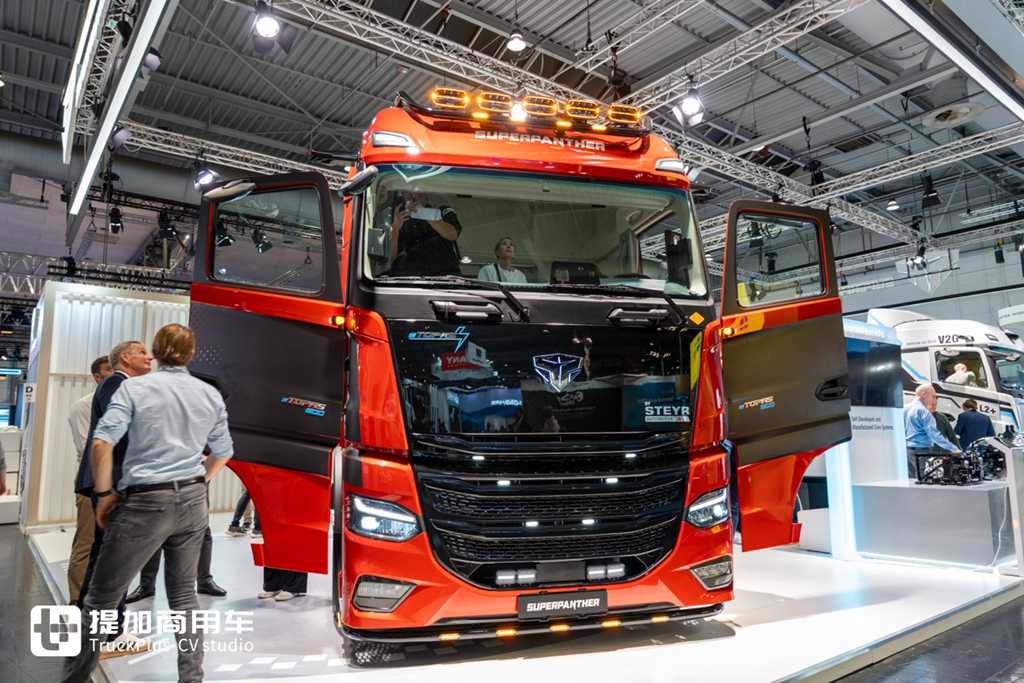
As the first Chinese new-energy heavy truck company to achieve localised mass production and volume deliveries in Europe on the strength of all-in-house technology, Subao has not taken the traditional export route of "low price for market share". Instead it starts from high-voltage e-drive core technology and rebuilds the operating-cost logic of electric heavy trucks from the vehicle's underlying architecture. The model — which obtained EU WVTA whole-vehicle type approval in June 2026 and began volume deliveries at its Steyr plant in Austria in July — has already won first purchases and deliveries from European logistics companies including DHL and Gress, and further secured a volume purchase order from GARTNER, a century-old Austrian logistics firm. DHL has put the eTopas 600 into daily service on its Dutch transport network, covering domestic Dutch and cross-border Belgian routes at a steady 2,000 km a week, validating the value of the technology in real operating data.
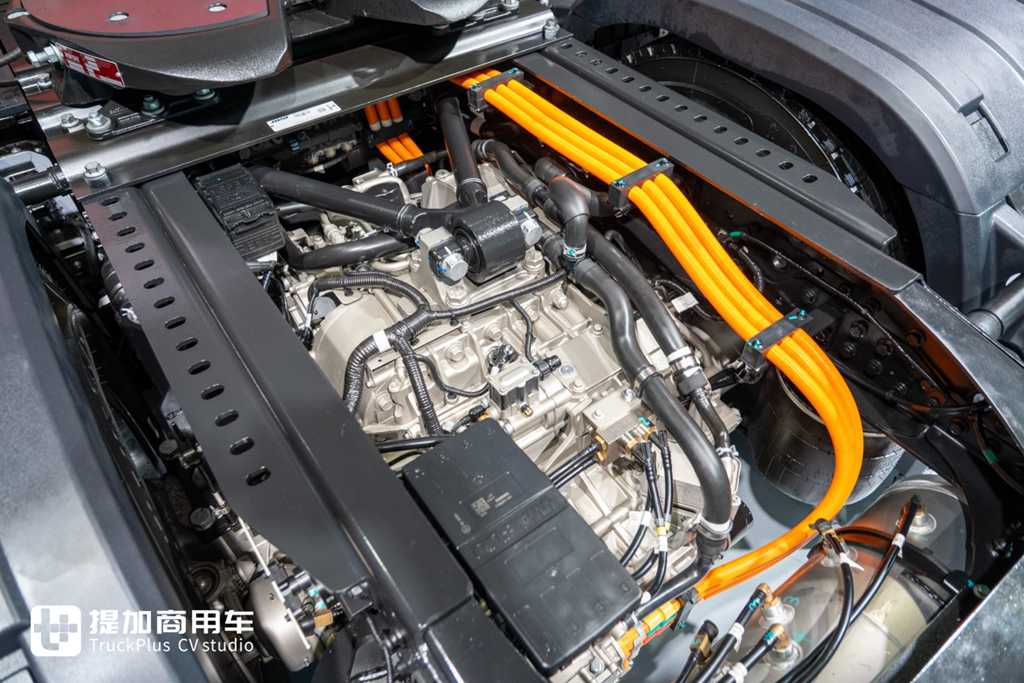
The reason Subao's all-in-house high-voltage e-drive core technology can act as a lever on operating value is that it precisely targets the three most important cost items in the TCO structure of European electric heavy trucks, achieving efficiency optimisation across the whole lifecycle from purchase to use. In MAN's benchmark model, leasing cost is the largest premium source for electric heavy trucks, underpinned by European brands' high price tags of 250,000 to 300,000 euros and the residual-value risk of an immature second-hand market. Through all-in-house development of the high-voltage electrical architecture and integrated e-axle, Subao brings core-system R&D, design and whole-vehicle integration into a unified system, building independent capability in reducing system redundancy, improving e-drive efficiency and optimising supply-chain costs. Compared with relying solely on external procurement and system assembly, this architecture-first development model creates more room for whole-vehicle cost control and long-term operating efficiency. Combined with the findings of the European Federation for Transport and Environment, electric heavy trucks made in China achieve a five-year TCO on average 9% lower than traditional European brands thanks to in-house technology and supply-chain advantages. This means electric heavy trucks no longer need to rely entirely on toll policy to bridge the price gap — the product itself can narrow the cost gap with diesel.
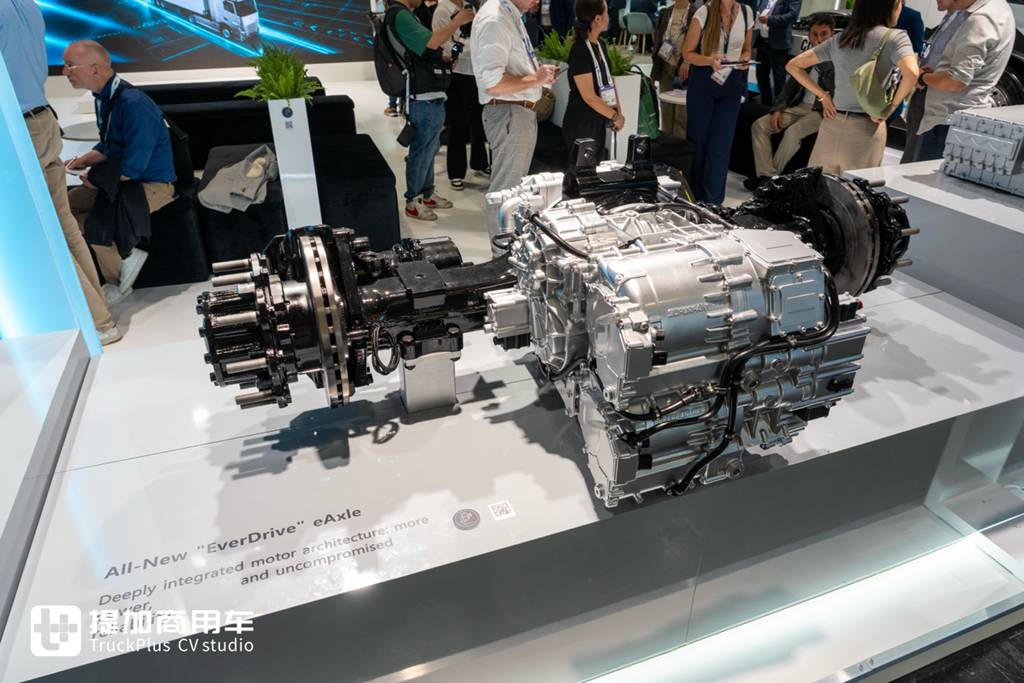
On the energy cost side, the value of this technology is even more direct. In MAN's benchmark scenario an electric heavy truck consumes 100 kWh per 100 km; Subao's integrated e-axle, by reducing drivetrain losses and optimising motor efficiency across the operating range, lifts transmission efficiency by 5 to 8 percentage points, corresponding to roughly a 10% cut in energy consumption per 100 km. This 10% optimisation should not be underestimated: under Europe's differentiated electricity tariffs it means cost resilience across all scenarios. For customers in Germany and Austria equipped with on-site solar and storage, a off-peak tariff of 0.16–0.20 euros combined with low consumption further amplifies the energy-cost advantage; in markets such as Italy, where public charging dominates and on-site charging conditions are limited, at a public tariff of 0.4 euros the lower consumption still genuinely reduces operating expenditure and weakens fleets' dependence on cheap depot power. At 100,000 km a year, the energy-consumption optimisation alone saves about 3,000 euros per vehicle per year — 15,000 euros over five years — a return obtained entirely from product technology, with no reliance on policy.
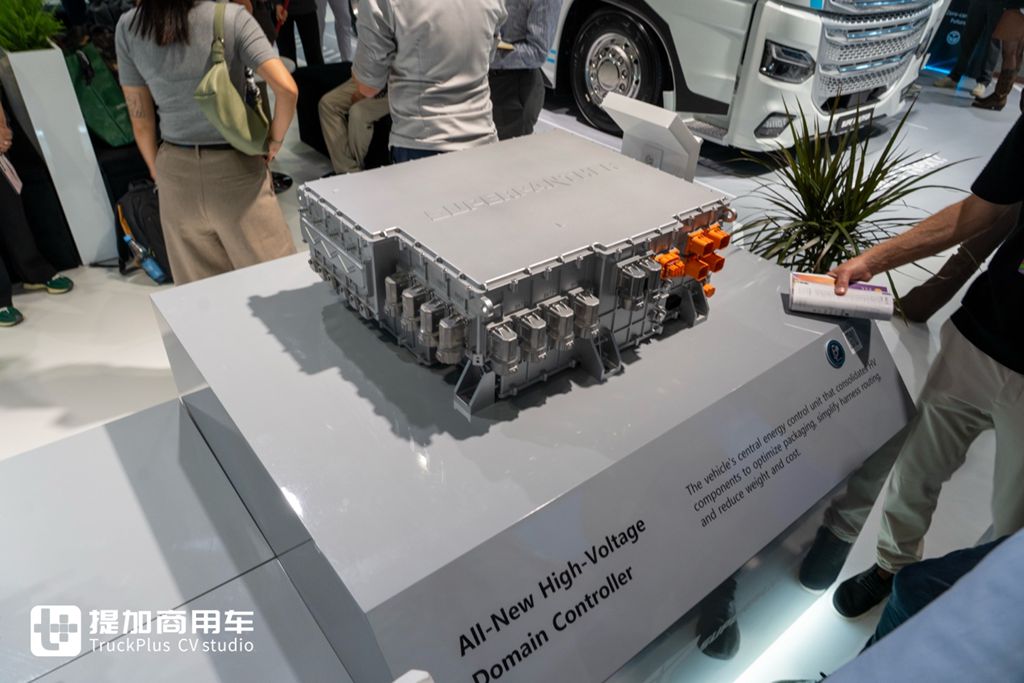
At the same time, the fast-charging compatibility brought by the high-voltage architecture both spreads the cost of charging infrastructure and raises vehicle operating efficiency. In MAN's benchmark model, charging infrastructure costs 5 euro cents per kilometre, driven mainly by the service capability and turnover rate of each charger. The Subao eTopas 600 adopts an 876V high-voltage electrical architecture with dual CCS2 charging connectors; with compatible dual-charging equipment and power supply it can achieve a combined charging power of up to about 660 kW, cutting the 20%–80% charging time to under 38 minutes. A charger that once served five vehicles can now cover more, directly reducing a fleet's investment in site power distribution and charger build-out. More importantly, shorter refuelling times mean more effective operating hours, lifting annual mileage by 10% to 15% — matching MAN's sensitivity analysis conclusion that every 10% increase in annual mileage adds 1.6 percentage points to the TCO advantage of an electric heavy truck, forming a positive loop of "technology efficiency — mileage growth — cost dilution".
What truly gives this technology industry-level significance is that it breaks the European electric heavy truck fate of "advantage disappearing when policy retreats", giving fleets certainty for long-term operation. Today's electrification purchasing decisions in Europe are to a large extent bets on policy continuity: German customers bet that toll relief will not shrink sharply after 2031, while southern European customers can only wait for policy to land. MAN's calculations have already proven that toll discounts are the first pillar of the current European electric truck cost advantage; once policy retreats, many fleets' electrification investments will face the risk of cost inversion. Subao's high-voltage e-drive technology essentially moves the foundation of cost advantage from policy incentives to product technology: in Germany and Austria, where incentives are ample, it can further expand customers' five-year TCO advantage beyond the current 7%–9%; in Italy and Spain, where there is no toll relief, it can substantially narrow the cost gap between electric heavy trucks and diesel, turning electrification from a "policy choice" into an "economic calculation".
This found a strikingly contrasting industry footnote at the 2026 IAA Transportation in Hanover. During the show, the heads of seven European truck makers including MAN jointly called on the EU to postpone its 2030 CO₂ reduction target for heavy vehicles by three years, arguing that charging infrastructure, grid access and cost conditions lag the plan by at least three years. Subao, as the only Chinese company on the IAA main stage, not only brought the eTopas 600 production model and signed orders for dozens of units including from Austrian logistics giant GARTNER, but also unveiled a heavy-truck embodied-intelligence strategy centred on Truck Brain. On one side European giants ask to slow the target because of cost and infrastructure lag; on the other a Chinese brand cuts costs through underlying technology while laying out the next intelligent track — behind these two paths lie different answers to the question of where the core value of an electric heavy truck comes from.
Looking back, Subao's choice of high-voltage e-drive core technology as its breakthrough was a hard but correct road. It did not cater to the market's stereotype of "value for money" but used all-in-house technical capability to address European customers' most central operating anxiety. From localised production in Austria to real-world operation at DHL, volume purchasing by GARTNER and the technology showcase at IAA, every step Subao takes is refreshing the European market's perception of Chinese new-energy commercial vehicles: no longer a chaser relying on supply-chain cost advantages, but a participant able to define operating value from underlying technology.
Placed in the dimension of Chinese commercial vehicle globalisation, this is a further paradigm upgrade. In the past "Chinese goods going global" relied on scale and cost; today's "pride of Chinese goods" competes on core technology and whole-lifecycle value. The landing of the Subao eTopas 600 in Europe not only demonstrates Chinese companies' integrated capability from independent R&D and in-house production of core components to localised European mass production and delivery, but also continuously drives product optimisation through customer operating feedback, forming efficient synergy between technology development and market demand. Returning to the real challenges of the European electric heavy truck market: when policy incentives can hardly sustain cost advantage in the long run, a truly competitive product must create value through its own technological progress and operating efficiency. Subao is achieving mass production, delivery and customer operation in a mature European market through technological innovation and all-in-house development and production, giving new meaning to the "pride of Chinese goods" of a new era: going global through independent innovation, winning market trust through product value.
