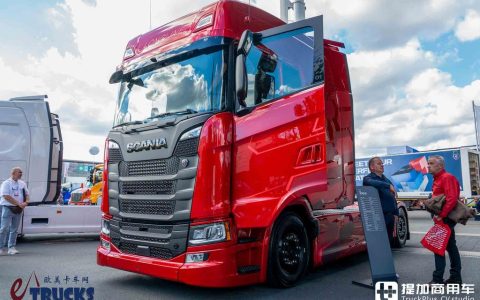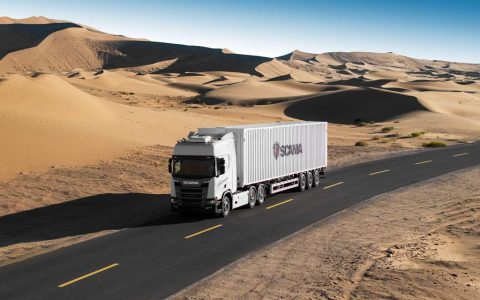
NEXT ERA Trucks held a product appreciation event in Rugao, themed "United in Motion". Set against the usual narratives of the Chinese heavy truck industry, the signals this event sent out are more nuanced than "how many units were sold": it felt more like a pace calibration — telling the outside world that this product knows what it is doing, and exactly where it is heading next.
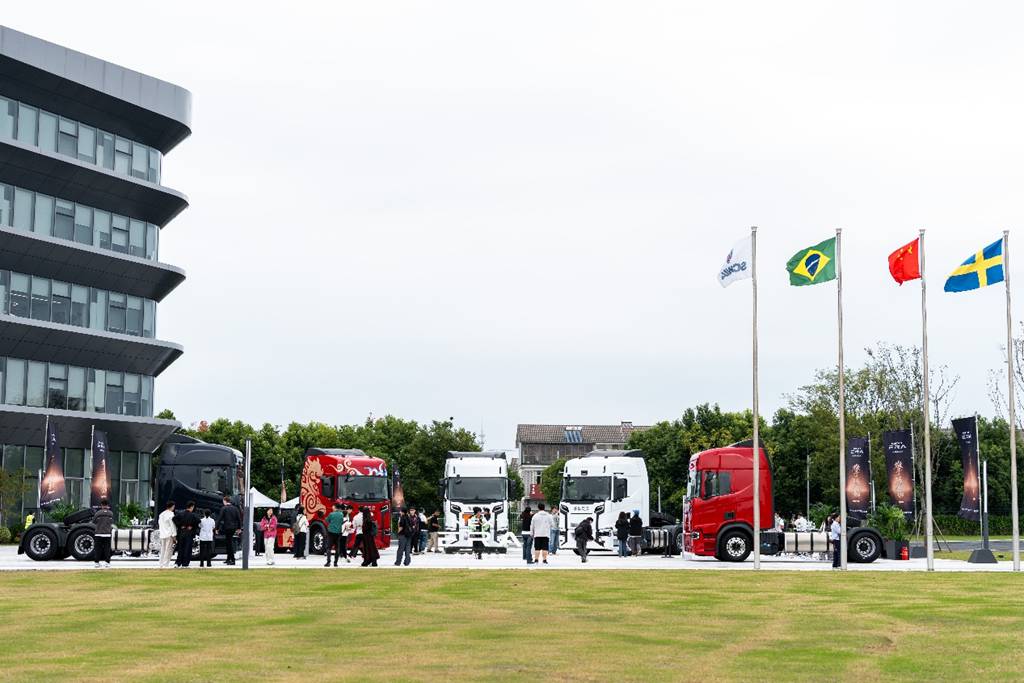
Several trucks were on site: an exclusive limited edition, a hazardous goods semi-trailer tractor, and a combined driver-assistance version. The three trucks point in three different directions, but the underlying logic is the same — all are scenario extensions built on the same mature platform, rather than starting from scratch. Sonia Ederstål, Vice President of R&D at Scania Group China, mentioned during the exchange that the hazardous goods semi-trailer tractor is based on compliance requirements following the implementation of the new national standard; the technical reserves are ready, and it can be launched once certification is completed. The combined driver-assistance version brings LiDAR and other equipment onto a heavy truck, responding to the real needs of long-haul trunk operations regarding driver fatigue and safety redundancy. The exclusive limited edition draws its design inspiration from the Swedish Dala horse and the Chinese Pixiu; Sonia said it embodies the fusion of Swedish heritage and Chinese culture. Seen together, these three trucks carry more information than any of them viewed alone: NEXT ERA Trucks has not placed all its bets on any single niche segment — it is laying a network, and every node of that network is tied to the same main axis: long-haul trunk transport.
The solidity of this main axis has seen initial validation over the past year. Song Lihui, General Manager of Sales and Service at NEXT ERA Trucks, revealed in an interview that a customer in South China first took five trucks for more than three months in the first half of the year, saving 3 to 5 litres per 100 km, and then directly ordered sixty more. In Xuzhou it started even earlier: seven units in March, forty in August, all deployed on ultra-long-haul trunk routes. These repeat-purchase cases are not earth-shattering in the industry, but placed on a new entrant, their meaning is different. A fleet owner who has run long-haul freight for more than twenty years does not pay a second time because of a "TCO concept" — he calculates whether the fuel saved on each trip covers the monthly payment, and how much freight revenue is lost when the truck breaks down on the road for days. The fact that such people come back proves the product stands firm in real operating scenarios.
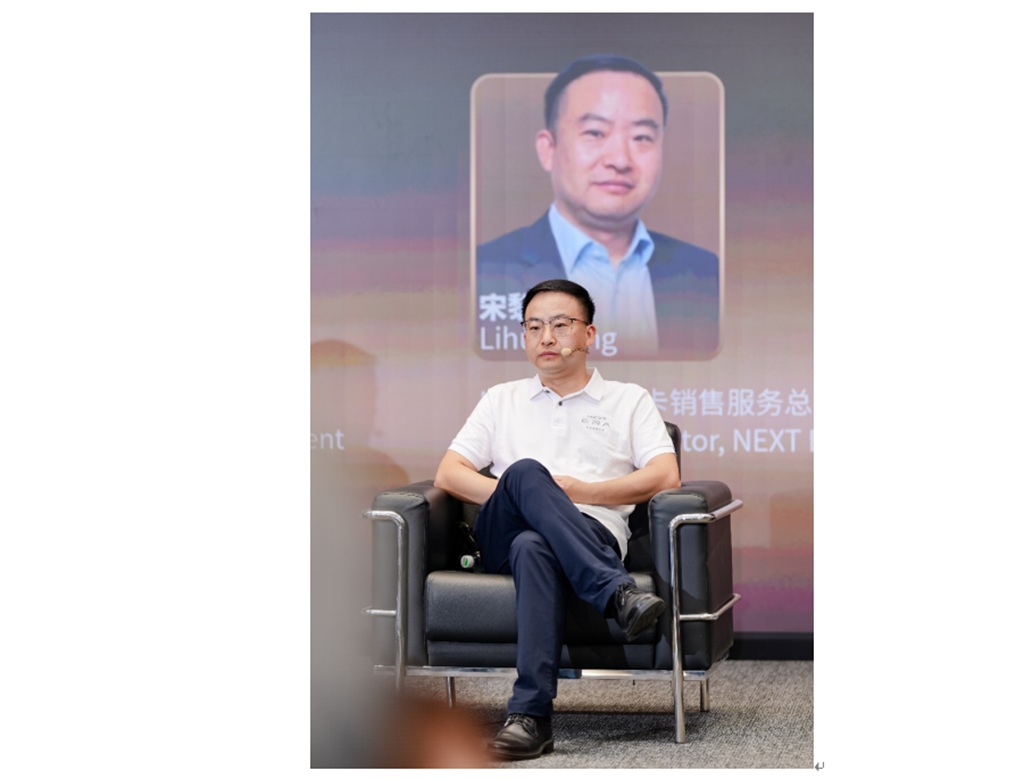
Song Lihui, General Manager of Sales and Service at NEXT ERA Trucks
The rollout of the network and service system also shows discipline. Song Lihui noted that at the start of the year, more than twenty tier-1 dealers and over a hundred outlets were signed, and the spare parts center began operations. By this product appreciation event, the dealer support center in South China came online in parallel, with parts stock, technician training, driver fuel-economy training and emergency response all advanced within one integrated system. He repeatedly spoke of "continuous cultivation and refinement" in measured language. In the commercial vehicle industry, restraint often requires more confidence than aggressiveness. The rescue response times in the southwest and northwest, the dedicated-site requirements for hazardous chemical parking, and how well service engineers know niche models — these are potholes a brand cannot fill in one year. Scania's global service reputation is an asset, but in the capillaries of China's trunk logistics, this network has only just begun to be woven.
What makes me pay a little more attention to the next phase of NEXT ERA Trucks is the sense of position on the R&D side and the functioning of the feedback mechanism. Sonia mentioned a local team of several hundred people able to iterate quickly for the Chinese market. The story of the Linyi owner was repeatedly cited by Song Lihui — the first truck generated a whole list of suggestions, and the second truck had them all fixed. The value of this story is not its warmth; it proves that a closed loop from dealer follow-up to R&D implementation is really turning. Mechanisms beat promises, especially in an industry like commercial vehicles where reputation snowballs. Song Lihui's stance on sales figures was also telling: he did not disclose specific numbers, saying only "there is never a satisfactory point", but "in good conscience, very satisfied". Behind this wording is clarity — pushing volume in the first year is not the hardest thing; the hard part is turning the first batch of users into repeat customers and giving second-year growth a foundation.
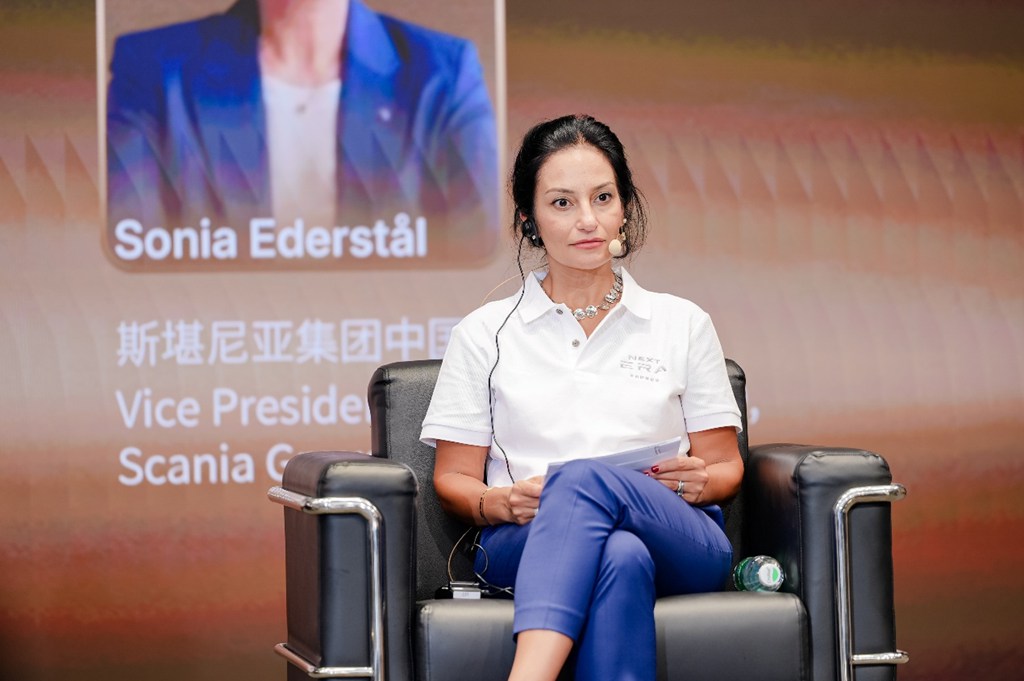
Sonia Ederstål, Vice President of R&D at Scania Group China
Of course, expectations aside, the present is not without concerns. The customer profile of hazardous chemicals transport differs greatly from general freight trunk lines — fleet size, decision chains, and sensitivity to compliance risk are not on the same scale. Whether the reputation NEXT ERA Trucks has built in general freight and express delivery can be transferred over requires time to verify. Song Lihui's positioning for the hazardous market is an "important participant" rather than a disruptor — a self-aware recognition. In this segment, NEXT ERA Trucks does not need to be a disruptor; winning the first step already means being the product that gives customers one more serious option to consider. Longer-term expectations rest on the energy route — Sonia made clear that electrification is a component of optimizing the TCO proposition, and natural gas technology is already reserved in the group's matrix, ready to be deployed the moment real market demand appears. This shows NEXT ERA Trucks is not betting its future on the single point of diesel or hazardous transport; it is leaving interfaces for switching between multiple technology routes.
From the limited edition being snapped up at last year's launch, to this year's hazardous goods semi-trailer tractor debut, the combined driver-assistance version coming to market, and the exclusive limited edition turning cultural symbols into product language, NEXT ERA Trucks has in one year gone from main-sales to niche scenarios, and its channel from zero to a hundred outlets. Within Scania's global system, this pace is unusual; within the Chinese heavy truck market, it merely keeps up. But keeping up means surviving — and only the survivors get to talk about the next step. What is most worth affirming now is not any single truck, but a quality that is scarce in the Chinese market: not being in a hurry. Not rushing to push volume, not rushing to shout slogans, not rushing to expand every track at once. Whether this sense of rhythm can hold up against an increasingly competitive market environment is a question more worth watching than any single product.
原创文章,作者:ctinsa,如若转载,请注明出处:https://ctinsa.com/ccnes/9854