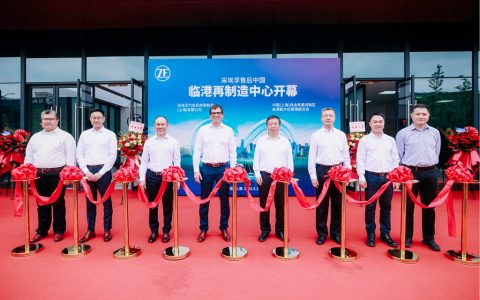
On May 21, ZF officially launched mass production of its new-generation trailer intelligent electronic braking system iEBS at its Jinan facility. Boasting core strengths in intelligence, safety and efficiency, this innovative product addresses key industry pain points and comprehensively upgrades trailer braking performance.
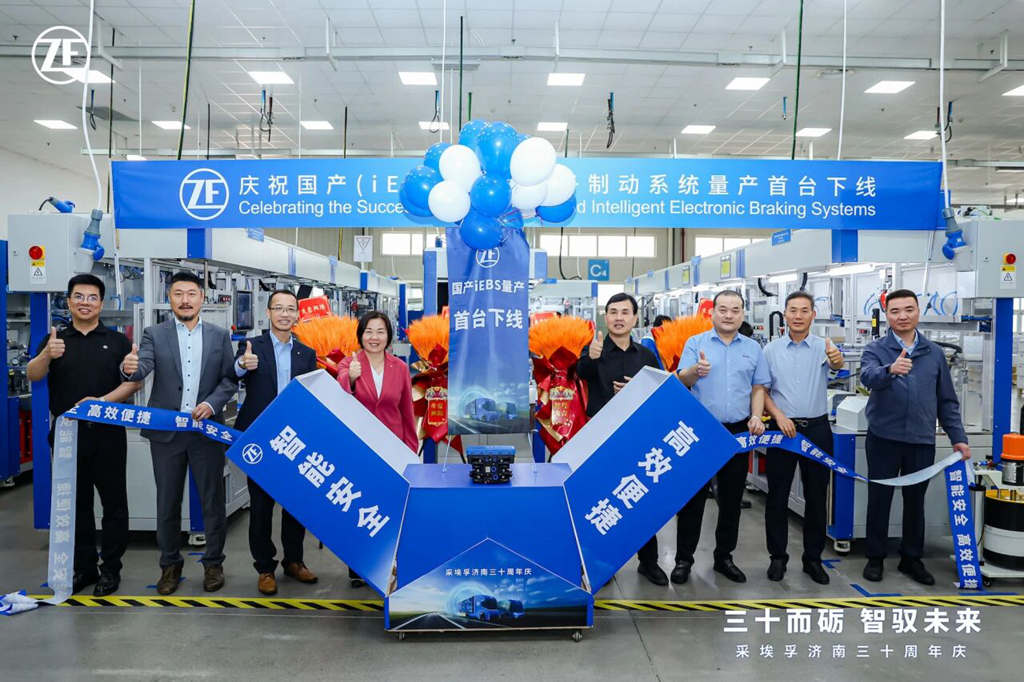
Traditional commercial vehicle operations are plagued by long-standing issues with trailers, including delayed braking response, bulky system layout, complicated maintenance and poor coordination between tractor and trailer. These problems hinder fleet efficiency and driving safety. To tackle these challenges, ZF developed the new iEBS. Featuring integrated and intelligent design, it sets a new technological benchmark for trailer braking systems.
Intelligent, Safe, Efficient and User-Friendly
The new iEBS adopts a highly integrated structure. Compared with the previous generation, its valve body is 17% smaller in size and 29% lighter in weight. Optimized port layout, advanced piping and streamlined product design greatly simplify assembly work. It improves installation efficiency and flexibility while cutting maintenance difficulty, striking an ideal balance between lightweight design and practicality.
More than just a brake controller, the system acts as the intelligent brain of the trailer. Equipped with built-in 3-axis acceleration sensors, it monitors vehicle dynamics in real time and adjusts braking force adaptively according to load conditions to maintain driving stability. It intervenes actively during sharp turns or lane drifts to prevent rollover risks and substantially enhance safety under complex operating conditions. It also improves braking coordination between tractor and trailer for overall vehicle safety. In addition, a patented overload protection design ensures steady and reliable braking performance.
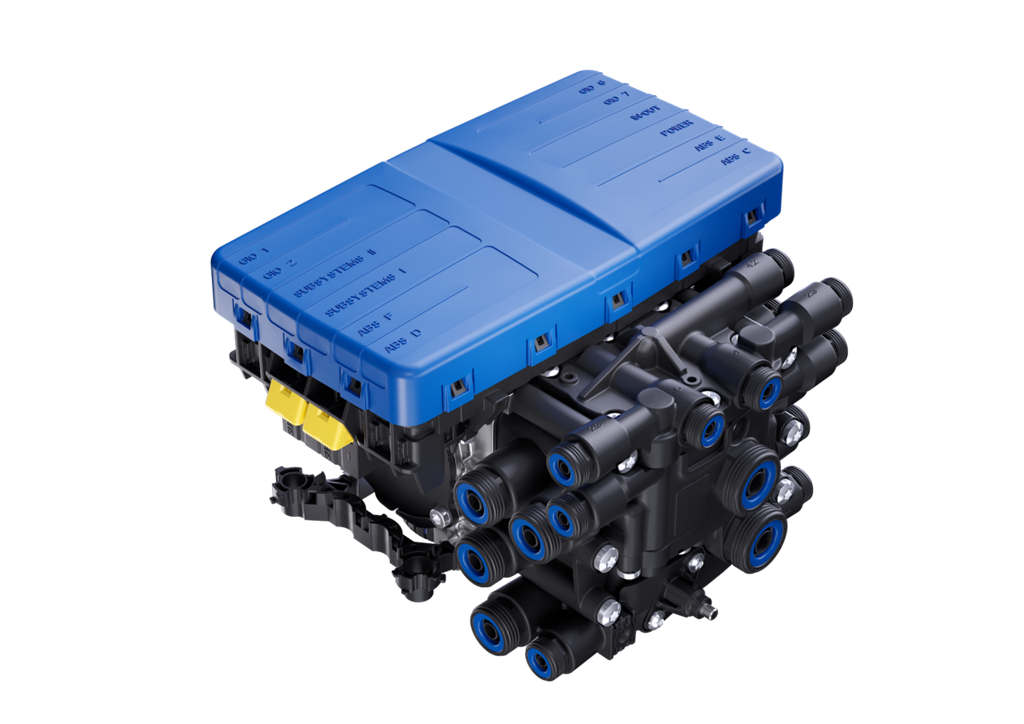
Supporting over 40 customizable functions, iEBS seamlessly integrates control of ZF electronically controlled air suspension, tire pressure monitoring and other on-board intelligent systems. It helps operators boost operational efficiency, driving safety and comfort. Load optimization also enables energy conservation and emission reduction, improving total fleet profitability. Thanks to excellent compatibility and modular design, iEBS simplifies vehicle architecture and lays a solid technical foundation for commercial vehicle autonomous driving, fleet electrification and smart logistics management.
Furthermore, the Key Management System (KMS), independently developed by ZF Commercial Vehicles’ local cybersecurity team, is secure, scalable and fully compliant with regulatory requirements. It has been fully integrated into iEBS to support customers’ compliant operations across China.
Localized Strength for Agile Empowerment
The successful mass production of the new iEBS marks that the Jinan plant has fully met ZF’s global standards in manufacturing processes, production capacity and quality management. It also represents a major step for ZF to deeply integrate its core R&D, supply chain and service systems into the Chinese market.
Adopting the local R&D + local production model, ZF optimizes and customizes products in line with Chinese regulations and diverse application scenarios. Localized manufacturing ensures stable product delivery and cost advantages, helping customers enhance overall vehicle competitiveness.
Yu Sujie, President of ZF Commercial Vehicle Solutions Asia Pacific, stated:
“The local mass production of the new iEBS is another milestone in ZF’s localization strategy, demonstrating our firm commitment and robust capabilities to deepen our presence in China. By rooting advanced R&D and manufacturing capabilities locally, we can respond to market demands more agilely, accurately and flexibly. We deliver safe and efficient braking solutions to customers and drive the steady electrification and intelligent upgrading of the commercial vehicle industry.”