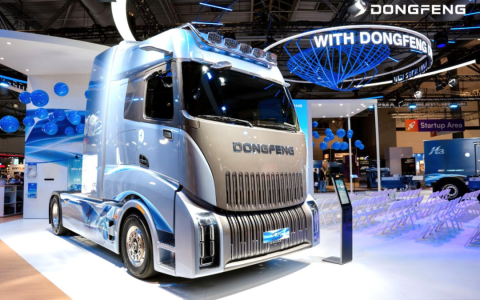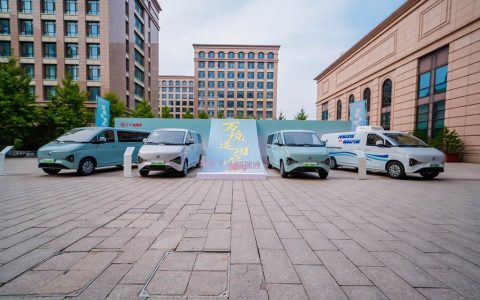
At a time when the global commercial vehicle industry is accelerating its search for zero-carbon transport solutions, Hanover is never short of new products. But what truly makes people stop and take a second look is not "yet another hydrogen vehicle".
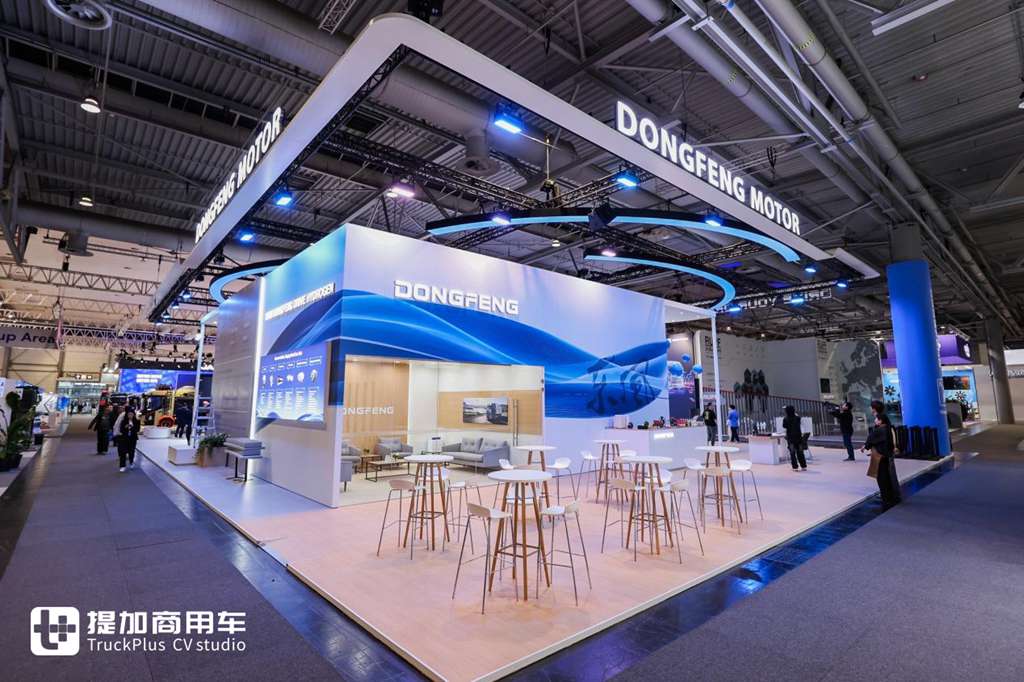
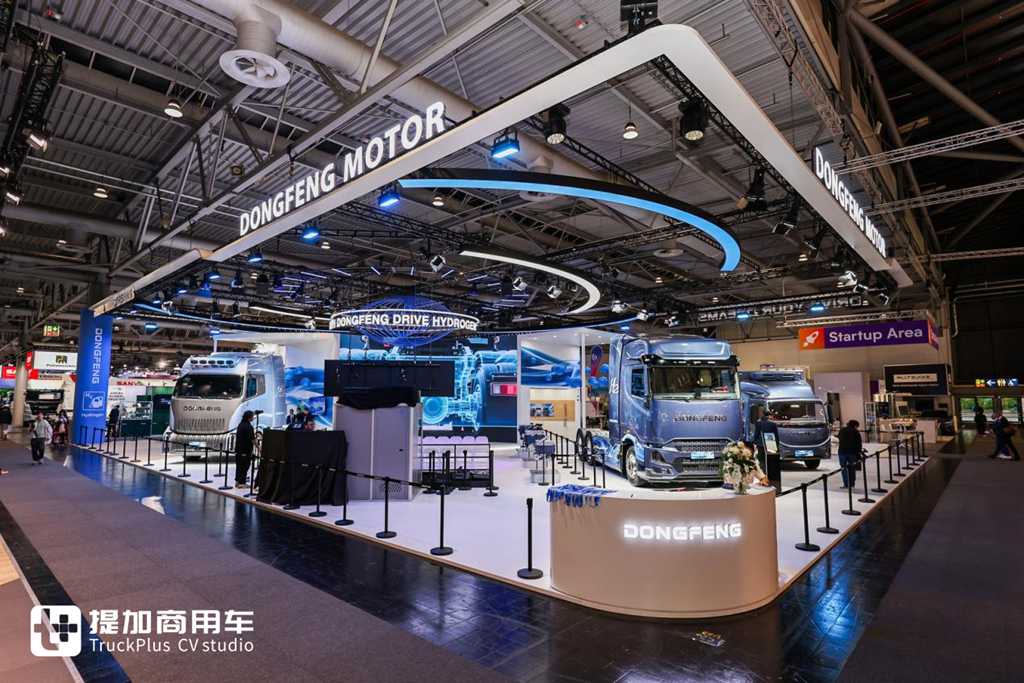
At IAA Transportation 2026, Dongfeng Motor, under the theme "With DONGFENG, Drive HYDROGEN — Ride Dongfeng, Travel with Hydrogen", brought three hydrogen complete vehicles, three hydrogen fuel cell stacks of 120kW, 150kW and 400kW, and one DHi16 heavy-duty hydrogen fuel hybrid system.
Looking at the booth layout, this is not a single-model launch, but a complete capability display: the complete vehicles target different transport scenarios, the stacks cover different power requirements, and the hydrogen internal combustion engine hybrid system fills out the multi-technology-route layout. With three product lines side by side, what Dongfeng wants to show is not "I have hydrogen products", but "I have the capability to turn hydrogen into a serialized commercial vehicle product line".
Three Complete Vehicles: Hydrogen Is Not One Truck, but Three Operating Solutions
The three exhibition vehicles on site correspond respectively to long-haul trunk transport, medium-long-haul transport and urban cold-chain distribution.
They do not solve the same problem.
DONGFENG-1: Aimed at Long-Haul Trunk Lines, Solving "Efficient Long-Range Operation"
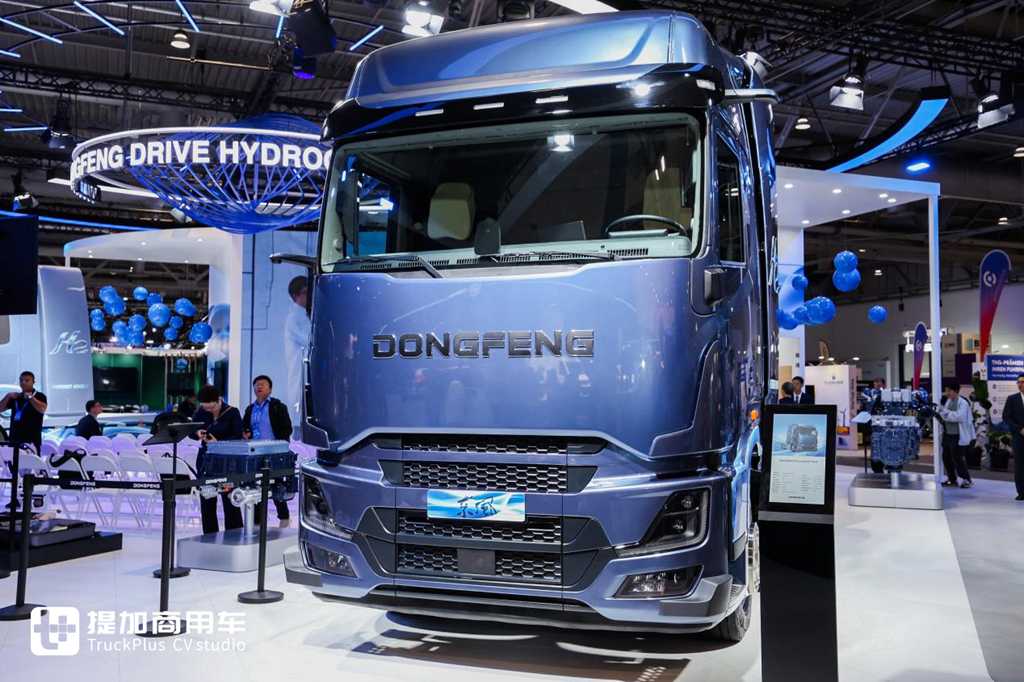
Positioned at the core of the booth, DONGFENG-1 is a 6×4 fuel cell long-haul trunk tractor with a total vehicle mass of 49 tons. It is equipped with Dongfeng’s 400kW fuel cell stack, four sets of 353L/70MPa hydrogen storage systems, dual 350kW motors and a 74kWh power battery, with a driving range of 800 kilometers.
For long-haul trunk transport, the difficulty of new-energy transformation has never been just the change of powertrain form, but not sacrificing timeliness. The vehicle needs to run far enough, refueling must not take too long, and power and operating stability must be guaranteed under full load.
DONGFENG-1 uses 70MPa high-pressure hydrogen storage; on-site materials show that refueling can be completed in 15 minutes. Combined with a 2-speed gearbox and dual electric drive axles, the focus is on meeting the power requirements of trunk working conditions such as high-speed cruising and heavy-load climbing. Its L2+ intelligent driving system supports full-speed-range ACC, PACC, LCC, ILC and other functions, further addressing the issues of driver fatigue and driving safety in long-haul transport.
The value of this vehicle is not in "how high the parameters are stacked", but in its attempt to let hydrogen heavy trucks enter the working rhythm of mainstream trunk logistics vehicles: one trip runs to completion, refueling connects seamlessly, and heavy loads don’t let you down.
DONGFENG-2: Aimed at Medium-Long-Haul Transport, Solving "Route Adaptability"
DONGFENG-2 is positioned as a fuel cell tractor for medium-long-haul transport, using a 4×2 drive configuration with a total vehicle mass of 44 tons. It is equipped with Dongfeng’s 150kW fuel cell stack, two sets of 400L/70MPa hydrogen storage systems, a 422kWh power battery and dual 350kW motors, with a driving range also reaching 800 kilometers.
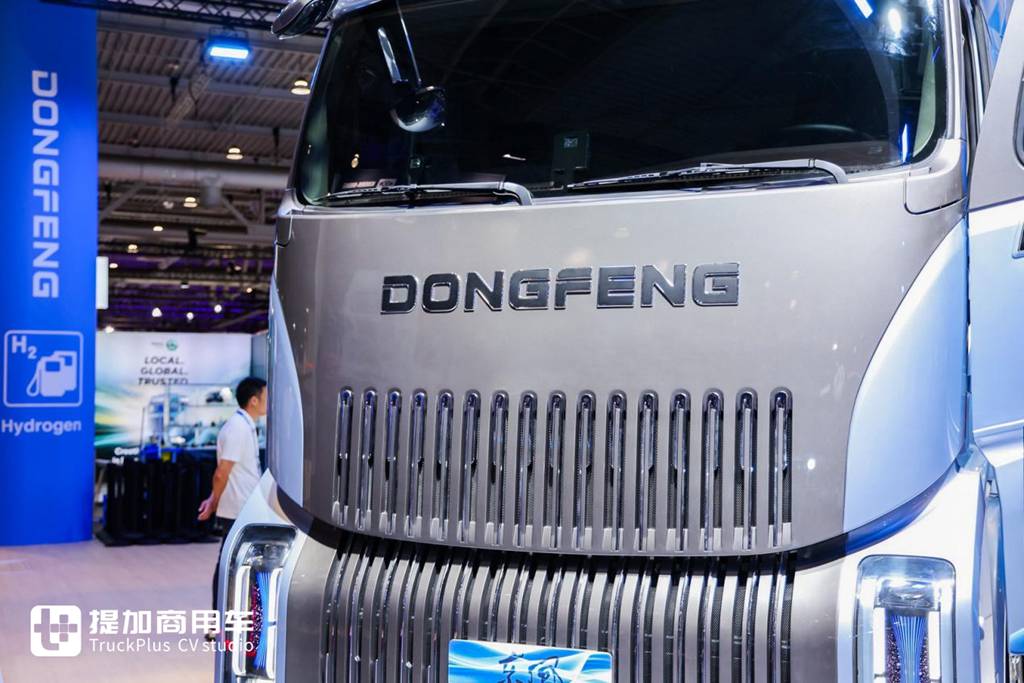
Compared with DONGFENG-1, DONGFENG-2 places more emphasis on the adaptability of "hydrogen-electric synergy". The 150kW fuel cell stack is responsible for stable energy supply, while the 422kWh power battery handles power response and energy buffering, with the two jointly serving medium-long-haul transport routes.
The complexity of this type of transport scenario lies in the fact that route length, cargo volume and refueling conditions are not all consistent. Discussing range alone is meaningless; what fleets really need is to remain dispatchable and operable across different routes and different refueling conditions.
Therefore, DONGFENG-2 incorporates many designs around operating efficiency: a long-front-overhang wedge design, integrated chassis aerodynamics optimization and electronic rearview mirrors reduce wind drag by 10%; the extensive use of high-strength magnesium alloy in the body reduces weight by more than 30% compared with steel structures. The former concerns energy consumption, the latter concerns payload, and both ultimately fall on the per-trip revenue of transport enterprises.
DONGFENG-3: Aimed at Cold-Chain City Distribution, Solving "No Break in the Chain Throughout"
DONGFENG-3 is a fuel cell urban logistics light truck for scenarios such as cold chain and city distribution. The vehicle uses a 4×2 drive configuration with a total vehicle mass of 4,495kg. It is equipped with Dongfeng’s 120kW fuel cell stack, two sets of 260L/35MPa hydrogen storage systems and a 15.45kWh power battery, with a driving range of 500 kilometers.
The special feature of cold-chain distribution is that vehicle operation is not the only energy consumption source — the continuous operation of the refrigeration unit also requires stable energy support. For high-value goods such as fresh produce and pharmaceuticals, temperature fluctuations mean direct cargo damage risk.
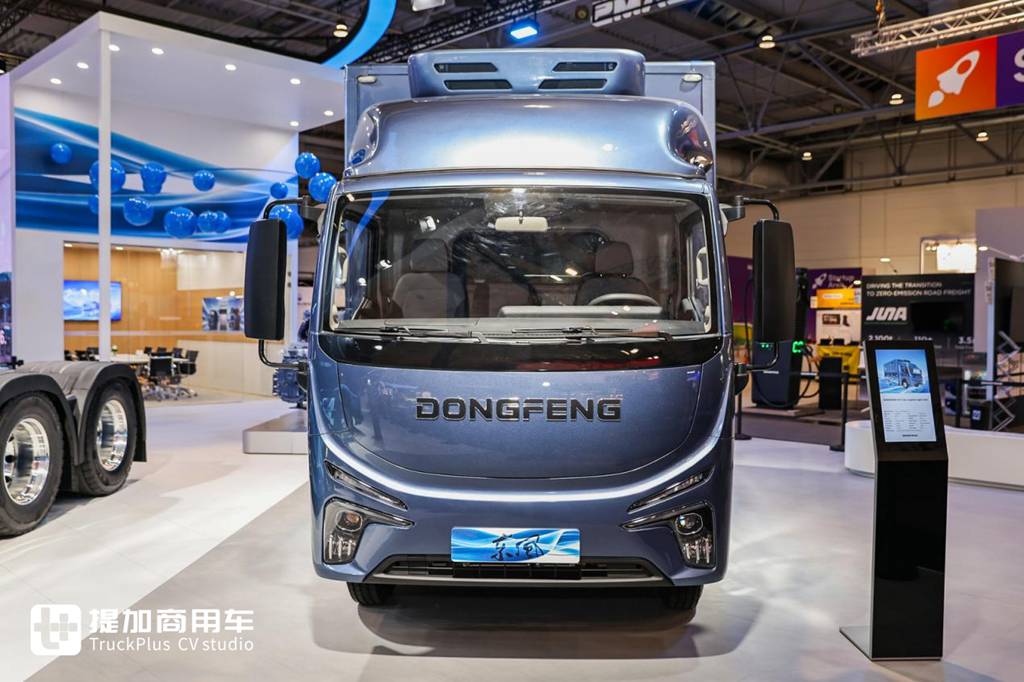
DONGFENG-3 is configured with a dual-temperature-zone cold box for freezing and refrigeration, and supports cargo box video, temperature and humidity monitoring and adjustment through the cab central control screen. The 35MPa hydrogen storage solution enables refueling in about 10 minutes, while the 500-kilometer range provides a more sufficient operating radius for city distribution and intercity cold chain.
What it presents is not a "light truck with hydrogen power swapped in", but a transport tool that combines the power system, cold-chain bodywork and cargo box monitoring together. For cold-chain users, what really matters is not whether the vehicle can achieve zero emissions, but whether it can control temperature, timeliness and cargo damage while operating with zero emissions.
Three Fuel Cell Stacks: Putting Core Powertrain Capability on the Global Stage
If the three complete vehicles reflect scenario landing, then the three hydrogen fuel cell systems demonstrate Dongfeng’s product lineup at the core powertrain level.
The 120kW hydrogen fuel cell stack is suitable for light passenger vehicles, light commercial vehicles and passenger cars. It adopts an 800V platform, with a maximum efficiency of 64%, dynamic response of 40kW/s, minimum operating temperature of -40°C, mass power density of 547W/kg, service life of no less than 33,000 hours and protection rating of IP67.
The 150kW hydrogen fuel cell stack targets medium and large buses, heavy-duty trucks, dump trucks and tractors. It adopts a 1000V platform, with a maximum efficiency of 64%, dynamic response of 40kW/s, minimum operating temperature of -40°C, mass power density of 770W/kg, service life of no less than 33,000 hours and protection rating of IP67.
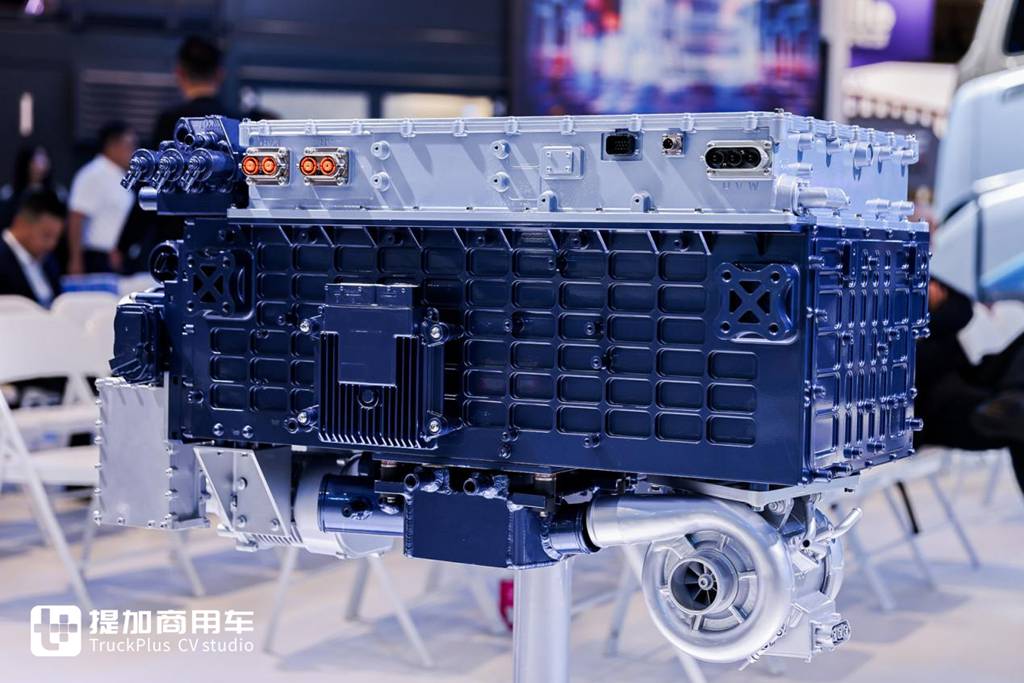
The 400kW hydrogen fuel cell stack serves heavy commercial vehicles and can be extended to applications such as rail transit and marine vessels. It adopts a 1000V platform, with a maximum efficiency of 65%, dynamic response of 60kW/s, mass power density of 1,350W/kg, minimum operating temperature of -40°C, service life of no less than 33,000 hours and protection rating of IP67.
The three stacks covering 120kW to 400kW reflect Dongfeng’s understanding of the needs of light, medium and heavy applications: light urban transport values high integration, low noise and environmental adaptability; medium and heavy products value power, reliability and platform compatibility; and heavy-load scenarios further require solving high power density, rapid response and long-term durability.
More importantly, all three stacks emphasize self-developed core software and hardware technologies. For hydrogen commercial vehicles, whether the core powertrain can be controlled independently determines not only the performance of one vehicle, but also the confidence in product iteration, cost control and global delivery.
One Hydrogen Internal Combustion Engine Hybrid System: Dongfeng Is Not Betting the Future on a Single Route
Beyond fuel cells, Dongfeng also exhibited the DHi16 heavy-duty hydrogen fuel hybrid system.
This system can be applied in heavy commercial vehicles, marine vessels and off-road applications, with an engine displacement of 16.2L, rated power of 412kW and maximum torque of 2,500N·m; it is paired with 200/350kW×2 motors and controlled by the DFCS3.0 powertrain domain controller.
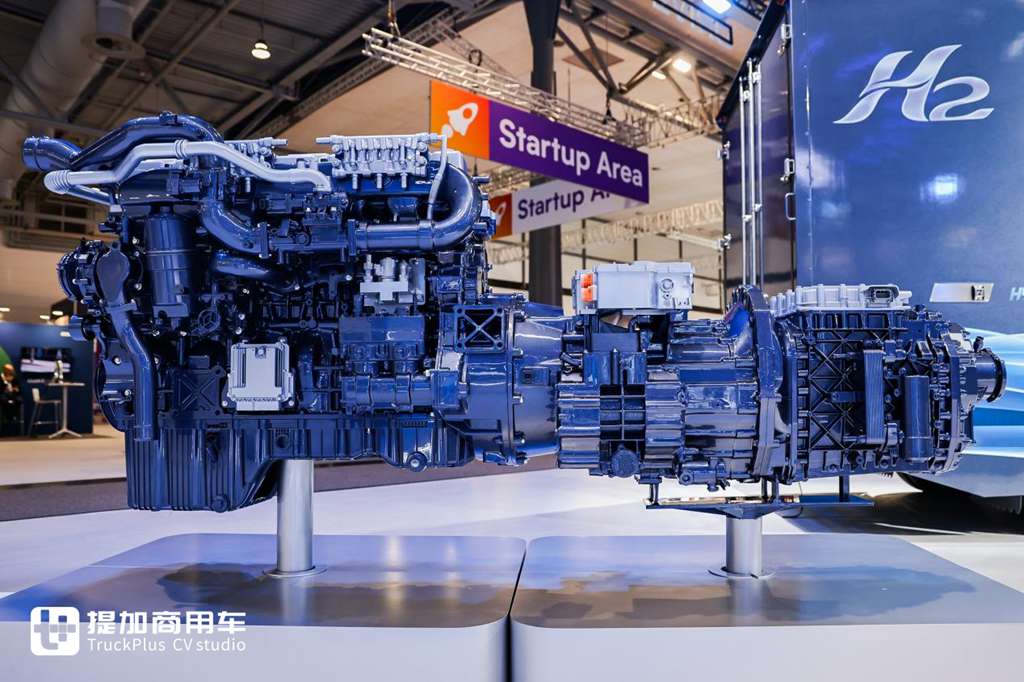
Its core highlights: adopting dome tumble ultra-lean-burn combustion technology, the engine’s effective thermal efficiency can reach 45%; the high-speed 8-layer flat-wire oil-cooled motor can achieve a maximum efficiency of 96.86%; Dongfeng’s DHT multi-gear series-parallel hybrid system can realize 14 working modes, allocating power and energy according to different working conditions.
The value of this system is not to make a "one or the other" choice against the fuel cell route, but to fill another realistic need in the low-carbon transformation of heavy commercial vehicles. Especially in heavy-load, marine, off-road and other fields with complex conditions, strong power demands and still-transitioning energy structures, the hydrogen internal combustion engine hybrid offers a more compatible technology option.
From fuel cells to hydrogen internal combustion engines, what Dongfeng showcased in Hanover is a multi-path-parallel technical judgment: there is no one-size-fits-all answer for zero-carbon transport; the real competitiveness lies in whether the appropriate powertrain solution can be provided according to the application scenario.
T1 Platform: Not Endorsing a Particular Show Truck, but Supporting the Evolution of Next-Generation Products
The complete vehicles and stacks on the booth are current products; the T1 commercial vehicle new energy platform is the technology foundation Dongfeng is building for next-generation new energy commercial vehicles.
The T1 platform covers multiple technology routes including pure hydrogen, hydrogen-electric hybrid and pure electric. Its core value is to turn the six major modules of fuel cell, hydrogen storage, power battery, electric drive system, central domain control and integrated thermal management into platform-level capabilities, supporting the development of products for different vehicle types, different energy routes and different operating scenarios.
The fuel cell module focuses on high power, long life and high efficiency; the hydrogen storage module adopts a shared platform concept for gaseous and liquid hydrogen, reserving choices for different range and space needs; the power battery module revolves around scenario-based forward definition, megawatt-level ultra-fast charging, low-SOC discharge and thermal safety; the electric drive module improves energy efficiency and power response through a 1000V high-voltage platform, silicon carbide modules and flat-wire oil-cooled motors.
Meanwhile, the central domain control module, through eight-in-one high integration and scenario-adaptive control, allows the powertrain system to allocate energy based on gradient, load, road conditions and other factors; the integrated thermal management module, with multi-source heat pumps and multi-mode temperature control, addresses the energy consumption fluctuations and component temperature management issues of new energy commercial vehicles in winter and summer.
The significance of this platform logic is not to magnify one parameter, but to integrate the originally scattered key systems, allowing new energy commercial vehicles to be developed faster, better adapted, and easier to balance efficiency, safety and cost across the full lifecycle.
What You See from the Hanover Booth Is Dongfeng’s Underlying Capability to Enter Global Competition
On this trip to Hanover, what Dongfeng displayed were not several isolated exhibits.
Three complete vehicles correspond to three types of real transport scenarios; three fuel cell stacks cover light, medium and heavy power needs; the hydrogen internal combustion engine hybrid system provides another route for complex applications and energy transition; and the T1 platform lays the foundation for multi-route development and scaled evolution of subsequent products.
From products to core components, from single models to platform capability, from fuel cells to multi-energy routes, Dongfeng is transforming its long-term accumulation into a visible, usable and expandable hydrogen commercial vehicle system.
Standing on the important stage of Hanover, the global commercial vehicle industry, Dongfeng conveys not only the exhibition proposition of "Ride Dongfeng, Travel with Hydrogen", but also a Chinese solution for global zero-carbon transport: not winning attention with single-point technology, but entering competition with full-chain capability; not just showing future concepts, but breaking the future down into products, systems and scenarios that can be landed.